Many Serpents, One English Name
"Rainbow Serpent" is an English term. It was coined by anthropologist A. R. Radcliffe-Brown in 1926 to describe ancestral snake beings he found in the beliefs of many Aboriginal peoples. There is no single Rainbow Serpent. Each people has its own serpent beings, with their own names, stories, places and laws. Some are male, some female, some both. Most are linked to water, rain and fertility, and to the power to create and to punish.

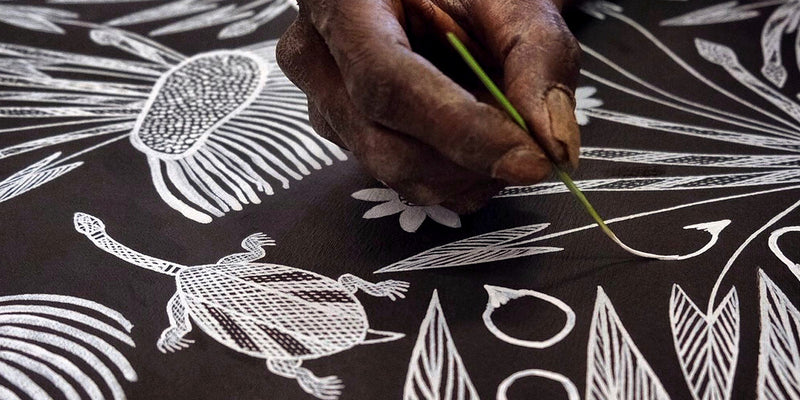
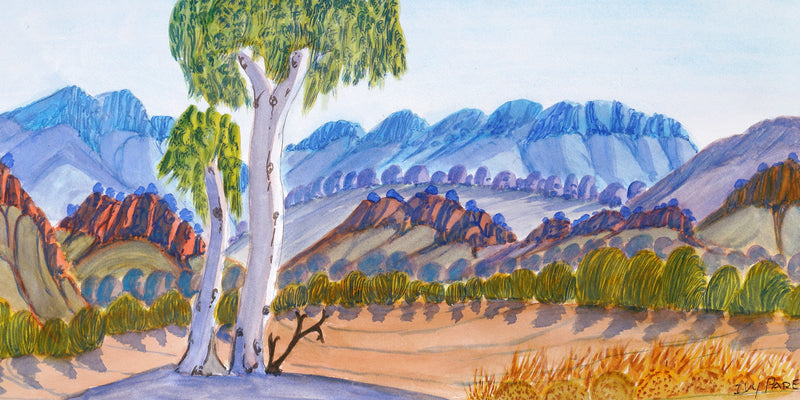
Left: Tiger Palpatja, Wanampi Tjukurpa, 2009. Right: Ginger Riley Munduwalawala, Garimala (The Two Snakes), 1988
Water, Rain and Law
Serpent beings are commonly said to live in permanent waterholes, beneath the ground or in storm clouds, and the rainbow in the sky is often seen as the serpent moving between waterholes. They control rain and water, which gives them power over life in dry country. They can bring storms, floods and cyclones, and they punish people who break law or approach their places without the proper protocols. Some serpent sites are dangerous and must be avoided, while at others people can hunt, fish and swim. In the Kimberley and Arnhem Land, serpent beings place spirit children in waterholes, linking them to conception and fertility.
Arnhem Land: Ngalyod and Wititj
In western Arnhem Land, Kunwinjku and Kuninjku people know the serpent as Ngalyod, who lives in deep waterholes and creeks, often shares its sites with yawkyawk spirits, and is associated with waterlilies and other water plants. In stories Ngalyod swallows people and later releases them transformed. In north-east Arnhem Land, Yolŋu tell of Wititj, the olive python, who swallowed the Wagilag sisters and their children, an event central to major ceremonies.
Arnhem Land also holds some of the oldest images of these beings. A 1996 study of rock art by Paul Taçon and colleagues found serpent figures appearing around 6,000 years ago, at a time when rising seas were flooding the coast. The earliest figures closely resemble the ribboned pipefish, a relative of the seahorse.
Central Desert: Wanampi
For Pitjantjatjara people of the APY Lands, Wanampi are giant water snakes who live in rockholes and control the water. Tiger Palpatja (c.1920–2012) of Tjala Arts at Amata painted the Wanampi Tjukurpa of Piltati, his birthplace, where two sisters and their husbands became Wanampi. The story now passes to younger family artists at Tjala Arts.
Gulf Country: Garimala
Ginger Riley Munduwalawala (c.1936–2002), a Marra man from south-east Arnhem Land, painted his mother's country around the Four Archers on the Limmen Bight River. The ancestral taipan Garimala, often shown as two snakes, created the Four Archers, then travelled down the river, went under the water and became the rainbow.

Left: Rover Thomas, Untitled (Rainbow Serpent), c.1986. Right: Jimmy Njiminjuma, Ngalyod, the Rainbow Serpent, c.1985
The Kimberley: Wungurr and Cyclone Tracy
In the Kimberley, serpent beings such as Wungurr (Unggud) and Juntarkal shape the land and its waters. When Cyclone Tracy destroyed Darwin on Christmas Eve 1974, Kimberley elders saw it as the work of a Rainbow Serpent and a warning to keep their culture strong. The event led to the Krill Krill (Gurirr Gurirr) ceremony revealed to Rover Thomas at Warmun, and serpents and the cyclone became recurring subjects in his paintings.
Serpents in Art
Serpent beings appear in rock art, bark paintings, carvings, weavings and canvases across Australia. Artists paint only the serpent stories they have the right to paint, through their family and country, which is why each artist's serpent looks and acts differently.
References and Further Reading
- Radcliffe-Brown, A. R. "The Rainbow-Serpent Myth of Australia." Journal of the Royal Anthropological Institute 56 (1926): 19–25.
- Taçon, Paul S. C., Meredith Wilson and Christopher Chippindale. "Birth of the Rainbow Serpent in Arnhem Land Rock Art and Oral History." Archaeology in Oceania 31, no. 3 (1996): 103–124.
- Buchler, Ira R., and Kenneth Maddock (eds). The Rainbow Serpent: A Chromatic Piece. Mouton, 1978.
- Ryan, Judith. Mother Country in Mind: The Art of Ginger Riley Munduwalawala. National Gallery of Victoria, 1997.
- Ananguku Arts (ed.). Tjukurpa Pulkatjara: The Power of the Law. Wakefield Press.
- National Gallery of Australia. Roads Cross: The Paintings of Rover Thomas.
- National Gallery of Victoria. Tiger Palpatja, Wanampi Tjukurpa, 2007.