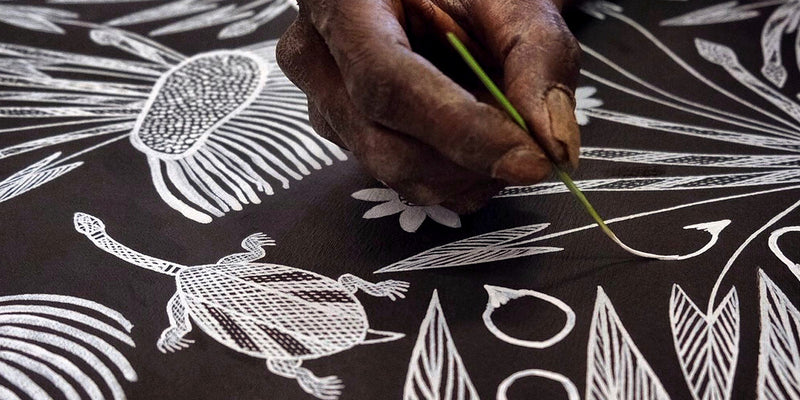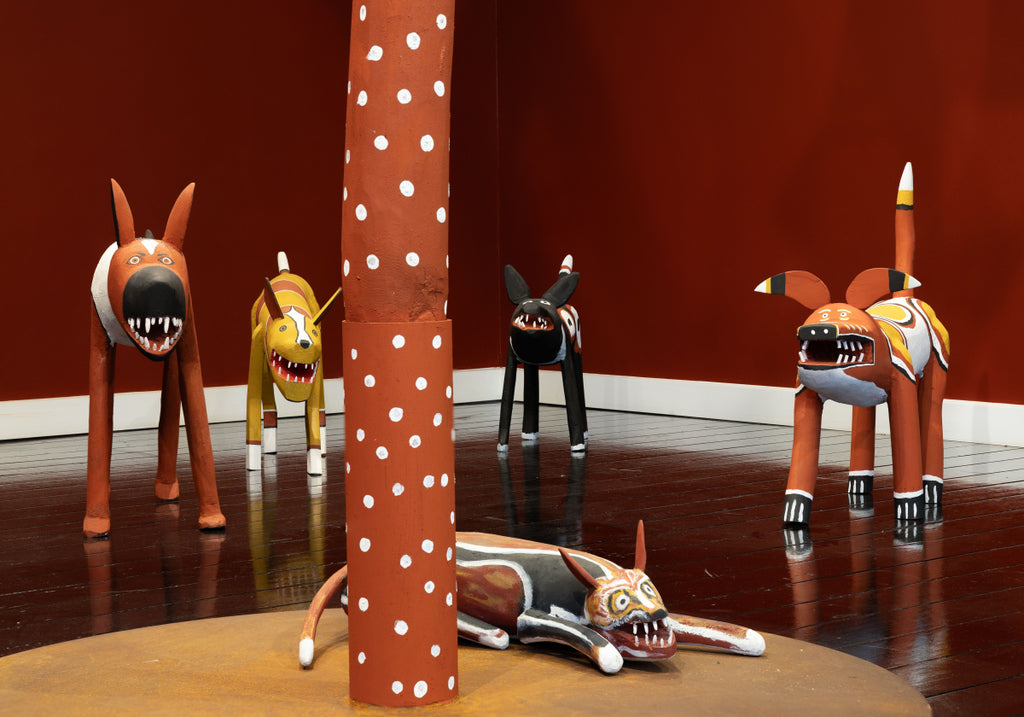
Wik and Kugu Ku' (dog) sculptures, Aurukun. Photo: Wik & Kugu Arts Centre
Wik & Kugu Arts Centre, Aurukun, Cape York Peninsula, Queensland
Aurukun was formally established as a Mission Reserve in 1904 by the Presbyterian Church of Australia, and from those early years men produced traditional tools including spears, woomeras, firesticks, and shields, while women wove string bags from spun cabbage palm fibre that became internationally renowned. In 1962 a major ceremony at Um Toch (Dry Swamps) brought together fully initiated men from all five Wik and Kugu clans. Filmed by Ian Dunlop, it introduced Wik and Kugu culture to a global audience and is widely regarded as a catalyst for the contemporary art movement in Aurukun. By the 1990s artists began producing sculpture and paintings commercially, drawing on their ceremonial carving traditions to create works of non-ceremonial substance. The earliest significant ethnographic collection of Wik sculpture was made by Ursula McConnel in the late 1800s; that collection is now held in the South Australian Museum.
Wik & Kugu Arts Centre is a community-owned social enterprise hosted by the Aurukun Shire Council, located on the west coast of the Cape York Peninsula approximately 1,000 kilometres north of Cairns. It serves the five ceremonial clans of Aurukun: Apalech, Winchanam, Puch, Wanam, and Sara. The centre includes a men's workshop and a women's painting studio, and supports over 20 established and emerging artists. Aurukun is home to Wik-Mungkan, considered the only traditional Aboriginal language left in Queensland spoken as a first language by every generation at home. The sculptural work produced here is distinct from most of Australia, with carved totemic animals, ku' (camp dogs), birds, and ancestral figures rendered from yuk thanchal (milkwood) and other timber, painted with ceremonial ochres specific to each clan's country. In 2023, Apalech artist Keith Wikmunea won the Telstra Art Award, Australia's most prestigious Indigenous art prize worth $100,000, for his large-scale carved sculpture Ku', Theewith & Kalampang: The White Cockatoo, Galah and the Wandering Dog. That same year, Janet Koongotema was a finalist in both the Telstra NATSIAA and the Wynne Prize at the Art Gallery of New South Wales.
Wik & Kugu Arts Centre at a glance
- Location: Aurukun, west coast of Cape York Peninsula, Far North Queensland
- Clan groups: Apalech, Winchanam, Puch, Wanam, Sara
- Art forms: Carved sculpture (totemic animals, ku' dogs, ancestral figures), painting, weaving, prints
- Language: Wik-Mungkan (lingua franca); one of only 12 surviving traditional Aboriginal languages in Australia
- Notable artists: Keith Wikmunea (2023 Telstra Art Award winner), Janet Koongotema (2023 Wynne Prize finalist)
- Getting there: Aurukun is a restricted community; permit required to visit