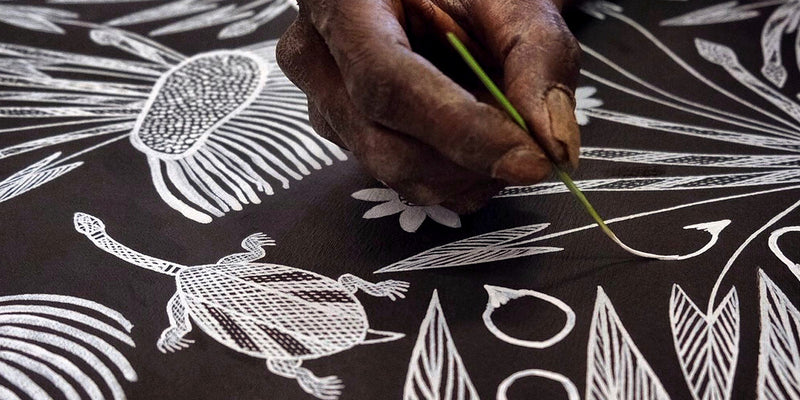
Aboriginal art is the world’s oldest continuous artistic tradition, spanning over 60,000 years. It tells stories of Country, kinship, and the Dreaming through intricate dot paintings, rarrk cross-hatching, and sacred symbols.
Remote Aboriginal artists share their culture through art to support their communities, their families, and themselves.
Ethical Aboriginal Art
Despite its incredible longevity and cultural significance, the Aboriginal art market still faces longstanding unethical practices. Artists are exploited, and buyers misled. Founded in 2015, ART ARK® exists to change that.
If you buy Aboriginal art ethically from ART ARK®, you’re choosing fairness, authenticity, and respect.
With over 1,590 five-star reviews, our customers proudly bring beautiful Aboriginal artworks into their homes while directly supporting remote Aboriginal artists and helping us stand against unethical trading.
Learn more about Ethical Aboriginal Art
Aboriginal Art You’ll Be Proud to Own
All artworks are original and come with a certificate of authenticity from the artist’s community-run Aboriginal art centre, confirming both cultural origin and ethical trade.
Authentic Aboriginal Art You’ll Be Proud to Own
Discover original Aboriginal artworks for sale, each certified by a community-run Aboriginal art centre. Every piece is photographed with professional colour accuracy, backed by a 120-day returns policy and fast, free shipping. With over 1,620 five-star reviews, ART ARK® makes buying Aboriginal art ethical, easy, and enjoyable.
Dot Paintings
From Australia's desert regions, rich with Dreaming stories and iconography.
Arnhem Land Art
Ochre artworks, bark paintings, and sculpture from Arnhem Land.
Watercolour Landscapes
Capturing the Australian landscape in the 'Hermannsburg School' style.
Stretched Desert Paintings
Ready-to-hang desert paintings. Perfect to gift or keep.
Arnhem Land Weaving
Naturally dyed pandanus weavings from Arnhem Land.
Desert Weavings
Aboriginal fibre art by the Tjanpi Desert Weavers using desert grasses.
ART ARK® Subscribers
Extra Aboriginal artworks and interesting emails for our community.
Learn About Aboriginal Art
Beyond sharing beautiful artworks with you, we invite you to explore the rich history of Aboriginal art in Australia. Discover the meanings behind Aboriginal art symbols, the significance of the Dreaming, and the artistic expression of Dreamtime stories. This journey will deepen your understanding and appreciation of the cultural heritage and timeless traditions that make Aboriginal art so significant.
Aboriginal Art History
Explore the history of Aboriginal art, tracing its journey from ancient rock paintings, through the impacts of colonisation, to contemporary times.
What is The Dreaming
Learn about The Dreaming, a foundational concept in Aboriginal art and culture that explains the interconnectedness of life and the spiritual world.
Aboriginal Art Symbols
Explore the diverse symbols in Aboriginal art, each embedded with deep cultural meanings and integral to the broader narrative of Aboriginal traditions.
Aboriginal Dot Painting
Understand the emergence of Aboriginal dot painting, an art form that uses intricate dot patterns to tell stories and preserve ancient traditions.

ART ARK® is based in Launceston, Tasmania (Lutruwita)
Ethical Aboriginal Art Matters
FAQs About Buying Aboriginal Art Ethically
What is authentic Aboriginal art?
Authentic Aboriginal means it is made by an Aboriginal artist. It is original, not a copy. True authenticity means it comes through a community art centre where artists are paid fairly and culture is respected.
How can I buy Aboriginal art ethically?
Buy art that has proven origins from a community-run Aboriginal art centre. These centres are run by the community and ensure artists are paid properly and their work is represented with respect. This is the only art we share. Learn more about ethical buying.
What are Aboriginal art centres?
Aboriginal art centres are community-owned studios in towns and remote regions. They support artists with materials, training, and fair payment, and help keep culture and language strong. Read about art centres.
How do I know if Aboriginal art is fake or unethical?
Be cautious if a seller will not share how much the artist was paid or where the artwork came from. Every unethical dealer claims to be ethical, but ethical traders can prove how their art is sourced and that artists are paid fairly. And are happy to share this. Every artwork we share comes from a community art centre with paperwork. More on authenticity.
What is a carpetbagger?
A carpetbagger is a dealer who takes advantage of Aboriginal artists by buying works for very low prices and reselling them for large profits. This happens outside community art centres and without fair payment or cultural respect. ART ARK® was founded to make people aware of this and to provide an ethical alternative that supports artists and communities. We believe no one knowingly chooses to support exploitation.
Are certificates of authenticity important?
Yes. A certificate from a recognised Aboriginal art centre shows that the artist is respected and paid fairly for their work. These certificates name the artist, story, and artwork details. Certificates from private dealers or galleries mean little when it comes to ethics.
Can non-Indigenous people buy Aboriginal art?
Yes. Buying Aboriginal art ethically supports and celebrates artists and their communities. What matters is that your purchase comes from a trusted, ethical source where the artist benefits directly.
ART ARK® Founder
Before founding ART ARK, Guy worked for these incredible community centres for over ten years. ART ARK's mission today is to combat the prevalent exploitation in the Aboriginal art market through education while providing you with a seamless, ethical way to support talented artists. Through these partnerships, we strive to foster a deeper understanding and appreciation of Aboriginal art and culture, promoting fair practices and the economic empowerment of Aboriginal communities.
Discover Aboriginal Artists and Community Art Centres
Discover famous Aboriginal artists and the community art centres that support them, and learn more about authenticity and buying Aboriginal art ethically with these articles.
25 Famous Aboriginal Artists You Should Know
Discover 25 famous Aboriginal artists, whose works have significantly contributed to both Australian and international art scenes.
88 Aboriginal Art Centres
Aboriginal and Torres Strait Islander Art Centres are vital to Indigenous communities across Australia, serving as dynamic spaces for cultural preservation, economic development, and social connection.
What We Mean by Ethical Aboriginal Art
We hammer on about ethics because there's a flip side that's not so rosy when buying Aboriginal Art.
Aboriginal Art Authenticity: What It Really Means
Authentic Aboriginal Art is a term that gets thrown around a lot as a catch phrase, mostly by unethical dealers, but if you scratch the surface, it means something.
Aboriginal Art Regions
Aboriginal art has significant regional variations that reflect the unique cultural identities and artistic expressions of different Aboriginal language groups across the continent. Historically, Australian Aboriginal peoples had three main forms of communicating; storytelling, songs, and visual communication through painting, drawing, and the use of ceremonial design. Without a written language, future generations, beyond generational learning, largely depended on the wide breadth of Aboriginal art to communicate and understand past practices and culture.
Learn more about Aboriginal Art Regions

ART ARK is Based in Launceston, Tasmania
Make an appointment to visit ART ARK , we'd love to have you.