Lockhart River Arts: A Legacy of the Cape York Art Gang
Note: Lockhart River Arts Indigenous Corporation entered liquidation proceedings in early 2026 after appearing before Cairns Magistrates Court for failing to lodge annual reports with the Office of the Registrar of Indigenous Corporations. The centre, founded over 30 years ago and internationally acclaimed, had struggled in recent years following the passing of several senior artists and others relocating from the community. Its closure is a significant loss for Australian art.
Lockhart River Arts was situated in the remote community of Lockhart River on the eastern coast of Cape York Peninsula, Queensland, 850 kilometres north of Cairns. Bounded by rainforest, mountain ranges, and the Coral Sea, the community of around 450 people produced some of the most distinctive and internationally recognised contemporary Aboriginal art of the past three decades.
The centre was established in 1995 in a former health clinic building, born from a strong focus on art at the local school. A group of young painters and printmakers who had just finished school began working together and became known as the Lockhart River Art Gang, a name drawn from the CDEP work-team structure of the time, like the "road gang." The corporation was formally incorporated in 1997, giving the artists freedom to make their own choices and move in the direction they wanted to go.
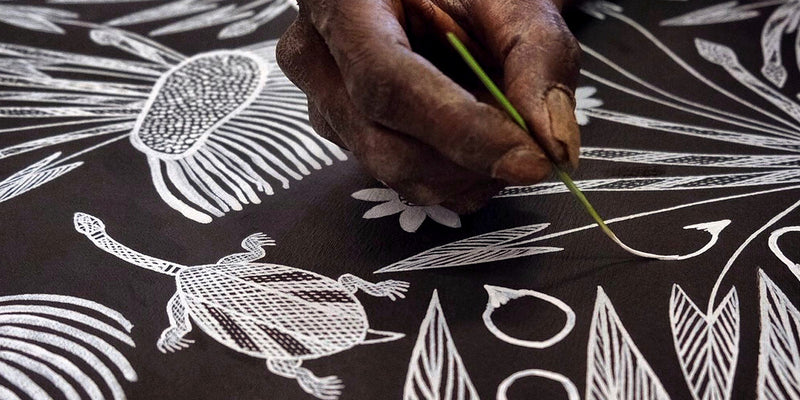
The Art Gang developed a body of work unlike anything else in Australia. Rather than the symbol-based painting of Central Australia or the bark painting traditions of Arnhem Land, Lockhart River artists created bold, expressive figurative work drawn from their particular world: the rainforest, the beach, the sea, the sky, and the experience of being Aboriginal in a remote coastal community. The language groups represented in the community are Umpila, Kuuku Ya'u, and Ungkum (Angkum), brought together at the Lockhart River mission which was established in 1924 and dramatically reshaped in 1934 when the Queensland Government forcibly relocated Aboriginal people from across Cape York Peninsula to the site.
Celebrated artists who came through the centre include Rosella Namok, Samantha Hobson, Fiona Omeenyo, Evelyn Sandy, Elizabeth "Queenie" Giblet, Silas Hobson, Patrick Butcher Jnr, Irene Namok, Leroy Platt, Joanne Butcher, Geoffery Warradoo, and many others. A respected group of elder women, known informally as "The Old Girls," produced vibrant works that became among the most collectible in the country. Their works are held in major public and private collections across Australia and internationally, including galleries in the United States, France, and Europe.
The centre's objectives, set at incorporation and never abandoned, were to support, retrieve, promote and encourage traditional Aboriginal culture at Lockhart River; provide a cultural keeping place; provide a public gallery in the community; support artistic merit and innovation; and provide facilities for cultural and arts activities. By any measure, those objectives were met and exceeded.
The manner of the centre's end is painful. Liquidation proceedings were triggered not by financial misconduct or governance scandal but by the failure to lodge annual reports with ORIC, a regulatory requirement that a single accountant or arts administrator could have resolved. The centre had faced real hardship in its final years, losing senior artists to death and to relocation. But the regulatory system that should exist to support and where necessary intervene to save institutions like this did not do so before the damage became irreversible. The Lockhart River Aboriginal Shire Council stated it would consider matters of continuity once information was to hand. As of early 2026, the outcome for the facility and its archive remains unclear.
The artists of Lockhart River and their work remain. The paintings, prints, and fibre works held in collections around the world carry the stories of this community and this country. That legacy cannot be liquidated.
Lockhart River Arts at a glance
- Active: 1995 to 2026 (entered liquidation proceedings February 2026).
- Location: Lockhart River, Cape York Peninsula, Queensland, 850 km north of Cairns.
- Language Groups: Umpila, Kuuku Ya'u, Ungkum (Angkum).
- Known For: The Lockhart River Art Gang; bold figurative contemporary painting and printmaking distinct from all other Australian Aboriginal art traditions.
- Collections: Works held in major public and private collections in Australia, the United States, France, and Europe.