The Aboriginal art produced at Martumili is known for its vibrant colours, fluid forms, and powerful cultural narratives. These artworks often illustrate Dreamtime stories, sacred sites, and the unique landscapes of the Martu ancestral lands. Using mediums such as acrylics on canvas, the artists blend contemporary styles with traditional themes, creating works that are both visually striking and culturally meaningful.
Continue reading →
The Spinifex Arts Project was started in 1997 as part of the documentation process towards a native claim for the Spinifex people of the Great Victoria Desert of Australia.
Continue reading →
Yarliyil Art Centre, Halls Creek WA. Jaru, Gija and Walmajarri artists in the Central Kimberley. 100+ members. Gallery open on the Great Northern Highway.
Continue reading →
Yarrabah Aboriginal Art Centre is particularly known for its exquisite ceramics, which feature intricate designs and patterns that reflect the local flora, fauna, and cultural stories.
Continue reading →
Yinjaa-Barni Art showcases the rich cultural heritage of the Yindjibarndi people. The name Yinjaa-Barni means "staying together," reflecting the collective’s focus on community and cultural preservation.
Continue reading →
The artists at Yarrenyty Arltere create distinctive pieces using a variety of materials, including recycled wool blankets, wire, and other found objects. Their works often feature whimsical, imaginative figures and animals adorned with intricate embroidery and beading.
Continue reading →
Ngukurr Arts is home to talented artists such as Gwenneth Blitner and Wally Wilfred. Gwenneth Blitner is celebrated for her beautiful depictions of the natural world and community life, using a vibrant colour palette and detailed brushwork. Wally Wilfred is known for his intricate carvings and paintings that capture the spiritual and cultural stories of his ancestors. Both artists continue to push the boundaries of contemporary Aboriginal art while maintaining a strong connection to their cultural roots.
Continue reading →
The art centre was founded by the late Balang T.E. Lewis, a renowned Jawoyn elder, artist, and actor. He envisioned Djilpin Arts as a way to sustain and promote traditional culture while creating economic opportunities for the community.
Continue reading →
Bima Wear is an Aboriginal enterprise located on the Tiwi Islands, off the coast of Northern Territory It was established in 1969, making it one of the earliest Indigenous textile enterprises in Australia.
Continue reading →
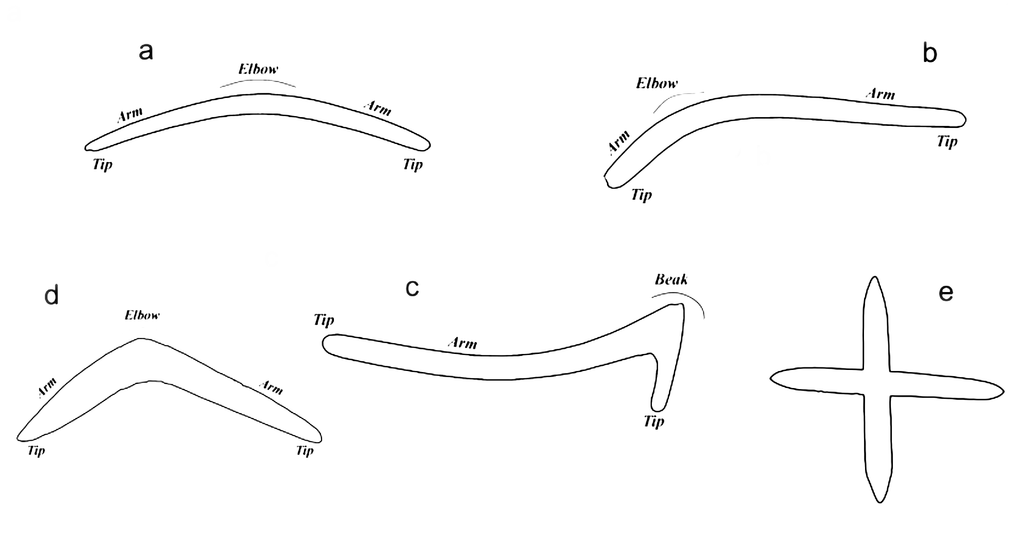
Boomerangs in Aboriginal Cultures Boomerangs are throwing sticks made by Aboriginal peoples for hunting, fighting, digging, cutting, making fire and music, and in ceremony. Most were not designed to return. Boomerangs were made across much of mainland Australia but not everywhere, and were never used in Tasmania or on Cape York. The oldest found in Australia, from Wyrie Swamp in South Australia, are about 10,000 years old. Boomerangs also appear in Gwion Gwion rock paintings in the Kimberley thought to be around 20,000 years old. Types of boomerang: (a) symmetrical, (b) asymmetrical, (c) beaked or hooked, (d) returning, (e) cross-boomerang. Drawings by E. F. Martellotta. Hunting and Fighting Boomerangs Most boomerangs were heavy, non-returning hunting and fighting sticks, sometimes called...
Continue reading →