Life is better with art!
Image Loading Spinner
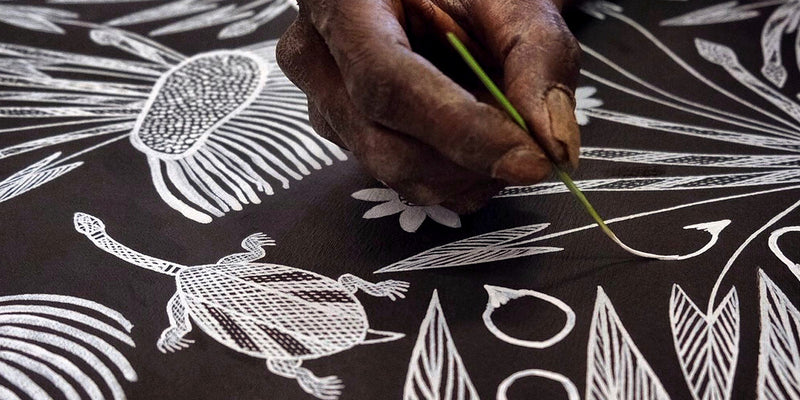
  • Aboriginal Artwork by Alison Kuwanjguwanj, Yawkyawk (, fish, and stingray) 96x87cm
  • Aboriginal Artwork by Alison Kuwanjguwanj, Yawkyawk (, fish, and stingray) 96x87cm
  • Aboriginal Artwork by Alison Kuwanjguwanj, Yawkyawk (, fish, and stingray) 96x87cm
Aboriginal Artwork by Alison Kuwanjguwanj, Yawkyawk (, fish, and stingray) 96x87cm

Alison Kuwanjguwanj, Yawkyawk (, fish, and stingray) 96x87cm

Made from naturally dyed pandanus, this beautiful weaving was created in Maningrida, Arnhem Land.

Original artwork certified by the community art centre.

120-day returns & free insured post
Ships from Tasmania within 1 business day
Estimated delivery: 1–3 days (Aus) · 5–10 days (Int’l*)
Colour corrected for accuracy
Maningrida Arts and Culture Certificate of Authenticity

Community Certified Artwork

This original artwork is sold on behalf of Maningrida Arts and Culture, a community-run art centre. It includes their Certificate of Authenticity.

  • Aboriginal Artist - Alison Kuwanjguwanj
  • Community - Maningrida
  • Homeland - Korlobidahdah
  • Aboriginal Art Centre - Maningrida Arts and Culture
  • Catalogue number - 1273-25
  • Materials - Pandanus and bush cane, with natural dyes
  • Size(cm) - H96 W87
  • Postage - Posted flat

Yawkyawk is a word in the Kunwinjku/Kunwok language of Western Arnhem Land meaning ‘young woman’ and ‘young woman spirit being’. The different groups of Kunwinjku people (one of the Eastern dialect groups call themselves Kuninjku) each have Yawkyawk mythologies, which relate to specific locations in clan estates. These mythologies are represented in bark paintings and sculptures of Yawkyawk beings. There are also a few examples of rock art images of these beings.
The female water spirits Yawkyawk or Ngalkunburriyaymi are perhaps the most enigmatic of mythological themes. Sometimes compared to the European notion of mermaids, they exist as spiritual beings living in freshwater streams and rock pools, particularly those in the stone country. The spirit Yawkyawk is usually described and depicted with the tail of a fish. Thus the Kuninjku people sometimes call them ngalberddjenj which literally means ‘the young woman who has a tail like a fish’. They have long hair, which is associated with trailing blooms of green algae (called man-bak in Kuninjku). At times they leave their aquatic homes to walk about on dry land, particularly at night.
Aboriginal people believe that in the beginning most animals were humans. During the time of the creation of landscapes and plants and animals, these ancestral heroes in human form transmutated into their animal forms via a series of various significant events now recorded as oral mythologies. The creation ancestor Yawkyawk travelled the country in human form and changed into the form of Ngalkunburriyaymi as a result of various ancestral adventures. Today the Kuninjku believe that Ngalkunburriyaymi are alive and well and living in freshwater sites in a number of sacred locations.
Some features of a respective country are equated with body parts of Yawkyawk. For example a bend in a river or creek may be said to be ‘the tail of the Yawkyawk, a billabong may be ‘the head of the Yawkyawk and so on. Thus different groups can be linked together by means of a shared mythology featured in the landscape, which crosscuts clan and language group boundaries.

Alison Kuwanjguwanj learned to weave from her mother Frewa Bardaluna, a master fibre artist who had numerous exhibitions with leading Australian commercial galleries.  Alison’s work is distinguished by her soft tonal range, strong sense of design and intricate technique.

Alison predominately uses gun-menama (pandanus spiralis) it make woven panels, dilly bags and 2D sculptures of animals and yawkyawks (female water spirits). To prepare the pandanus the inner leaves of the plant are collected using a hook. Each V-shaped leaf is first split in half along its spine. After removing the sharp spines, the two surfaces of the leaf are then split away from other. After this preparation, the pandanus is boiled in a billycan with plant materials to dye the fibre. Like her contemporaries, Alison only uses natural dyes and achieves enormous variation. Common colours in her work include:

– barra gu-jirra: the soft, white and fleshy end of the pandanus leaf imparts green to the fibre.

–  mun-gumurduk/ gala (Pogonolobus reticulatus): a bright yellow root that is crushed and put in a billycan with the fibre and boiled. It creates yellow when boiled once and deep orange hues when boiled multiple times.

– ngalpur (Haemodorum brevicaule): a bright red root which yields a range of purply red to brown colours.

– Baluk: ashes of certain plants are added to the boiling billycan with the fibre and dye plants to alter the colour that is imparted to the fibre. The fruiting body of gulpiny (Banksia denanta) is burnt and the ashes added to other day plants to make the colour pink. 

(Margie West, 1995, Maningrida – the Language of Weaving)


"Delighted with my purchase. Service parfait." - Julien, FR – ART ARK Customer Review

Arnhem Land Art from the Maningrida Homelands

Arnhem Land Art from the Maningrida Homelands

This artwork comes from Maningrida Arts & Culture, based on Kunibídji country in Arnhem Land. Artists live across homelands spanning more than 7,000 square kilometres of land and sea and over 100 clan estates where many distinct languages are spoken and people continue to live on Country.

— Image: Freda Ali Wayartja harvesting pandanus, Maningrida Arts & Culture


← Previous Page Arnhem Land Weaving Arnhem Land Art Dot Paintings Subscribers Stretched Paintings Desert Weavings Landscape Paintings