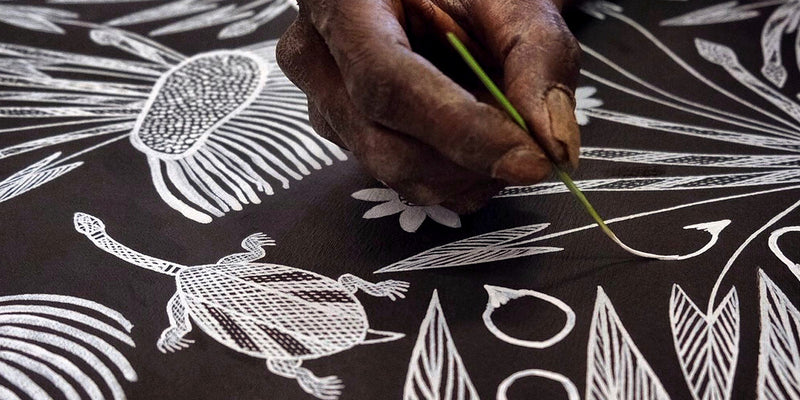
Life is better with art!
  • Michelle Inkamala, Ili (Desert fig tree), 60x50cm
  • Michelle Inkamala, Ili (Desert fig tree), 60x50cm
  • Michelle Inkamala, Ili (Desert fig tree), 60x50cm
  • Michelle Inkamala, Ili (Desert fig tree), 60x50cm
Michelle Inkamala, Ili (Desert fig tree), 60x50cm

Michelle Inkamala, Ili (Desert fig tree), 60x50cm

The desert fig is used by Anangu for bush food.

Original artwork certified by the community art centre.

120-day returns & free insured post
Ships from Tasmania within 1 business day
Estimated delivery: 1–3 days (Aus) · 5–10 days (Int’l*)
Colour corrected for accuracy
Iwiri Arts Certificate of Authenticity

Community Certified Artwork

This original artwork is sold on behalf of Iwiri Arts, a community-run art centre. It includes their Certificate of Authenticity.

  • Aboriginal Artist - Michelle Inkamala
  • Community - Ernabella/Adelaide
  • Aboriginal Art Centre - Iwiri Arts 
  • Catalogue number - 26-161
  • Materials - Professional artist acrylic on canvas
  • Size(cm) - H60 W50 D2
  • Postage variants - Artwork posted un-stretched and rolled for safe shipping
  • Orientation - Painted from all sides and OK to hang as wished

Michelle depicts the landscape at Ernabella. She paints the ili tree, the desert fig, which is used by Anangu for bush food.

Associated excerpt, Macquarie University

Desert Figs are of great importance to First Nations people of Central Australia, as a traditional source of food, for shelter, and for spirituality. Nutritionally, they are rich in calcium and potassium. Even the dry fruit fallen to the ground was ground with water to form hard balls that could be redried and stored for later use.

Historically, Indigenous people are known to have transplanted the figs and moved them to distant waterholes to provide future food resources. In part, the present distribution of the species is considered likely to have been due to human dispersal. Even in current times, cuttings and seedlings are transplanted by communities to provide food reserves.

The fig features in oral histories and is of such significance to the Pitjantjatjara people of Central Australia that historically, damaging a tree could be punishable by death.


Details are currently unavailable

Iwiṟi was established by Aṉangu in 2018, many of whom had been forced to move to Adelaide due to chronic health conditions and lack of services in their home communities. Living far from their traditional homelands, Anangu were concerned about the cultural and social isolation they were experiencing and saw a need to act.  Iwiri was formed initially to help retain, promote and transmit Anangu culture and language through the areas of arts, language, knowledge and community. Since then Iwiṟi has grown rapidly into an organization that delivers  a range of programs that aim to strengthen and advance Aṉangu wellbeing.

Iwiri strengthens the Aṉangu community through cultural and arts activities, creating employment opportunities and enterprise development. We want our young people to be strong in their language and culture and to take up opportunities to work in our community.

"True colours and beautiful workmanship." - Sarah, Aus – ART ARK Customer Review

Aṉangu Art via Adelaide

Aṉangu Art via Adelaide

This artwork comes from Iwiṟi Arts, an Aṉangu-led organisation in Adelaide established by Aṉangu who had moved from remote communities due to limited services and chronic health needs. The studio supports artists visiting or living in the city from the APY Lands, helping maintain strong cultural connection to Country, language and Tjukurpa while away from homelands.

— Image: Road to Pukatja (Ernabella), South Australia


← Previous Page Arnhem Land Weaving Arnhem Land Art Dot Paintings Subscribers Stretched Paintings Desert Weavings Landscape Paintings