Life is better with art!
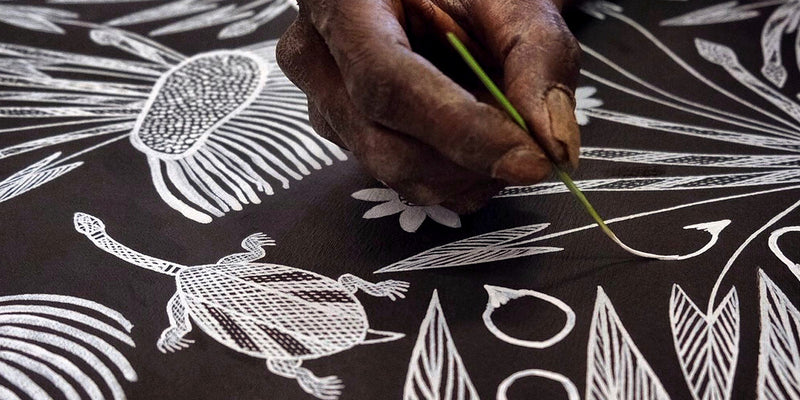
  • Aboriginal Artwork by Thelma Dundan Ngarga Judson, Percival Lakes, 122x76cm
  • Aboriginal Artwork by Thelma Dundan Ngarga Judson, Percival Lakes, 122x76cm
  • Aboriginal Artwork by Thelma Dundan Ngarga Judson, Percival Lakes, 122x76cm
  • Aboriginal Artwork by Thelma Dundan Ngarga Judson, Percival Lakes, 122x76cm

Thelma Dundan Ngarga Judson, Percival Lakes, 122x76cm

  • Reduced UK VAT of 5% on original art
  • Free insured post
  • 120-day returns
  • Ships from Tasmania in 1 business day, arrives in the UK in about a week
  • Colour-accurate images
Martumili Artists Certificate of Authenticity

Community Certified Artwork

This original artwork is sold on behalf of Martumili Artists, a community-run art centre. It includes their Certificate of Authenticity.

  • Aboriginal Artists - Thelma Dundan Ngarga Judson
  • Community - Jigalong
  • Aboriginal Art Centre - Martumili Artists
  • Catalogue number - 24-1361
  • Materials - Acrylic paint on canvas
  • Size(cm) - H76 W122 D2
  • Postage variants - Artwork posted un-stretched and rolled for safe shipping
  • Orientation - As displayed

The Percival Lakes form a string of ephemeral salt lakes in the north of Western Australia, extending across a distance of 350 km. They lie at the southern region of the Great Sandy Desert and east of the Karlamilyi (Rudall River) region. The Canning Stock Route runs in close proximity to some of the lakes, and crosses the salt pan of Tobin Lake near the eastern end.

This region was formed by Wirnpa, one of the most powerful of the ancestral jila (snake) men and the last to travel the desert during the Jukurrpa (Dreaming). Wirnpa is a rainmaking jila who lived and hunted in the Percival Lakes area. His travels are described in the songs and stories of many language groups across the Western Desert, even those far removed from his home site.

In his epic travels, Wirnpa met and feasted with many other ancestral beings, exchanged ceremonial objects, and created a series of different laws and ceremonies. When he finally returned home, he searched for his many children only to discover that they had already died. They had laid down and become the salt springs of the Percival Lakes. Wirnpa wept for his children before himself transforming into a snake and entering the soak where he still resides.

“I grew up around these salt lakes [Percival Lakes] with all the families; [my sister] Yuwali’s mob, all together. Too salty to drink, so [we would] get fresh water from Yimiri, a yinta (permanent spring) in the lake." - Thelma Dundan (Dunjan) Ngarga (Nyarrka) Judson

Ngarga is a Manyjilyjarra woman, born in the isolated Percival Lakes region of the Great Sandy Desert in the mid 1950s. She grew up primarily around Yimiri and Kurturarra soaks. She and her young siblings would stay close to the major water sources while their parents went out hunting. During the rainy season her extended family group would separate into smaller units, and when it was hot they would come back together at the permanent water source of Yimiri.

As a young girl Ngarga lived nomadically in this region with her family group, composed unusually of only female adults and children. The men that had been travelling with the group had either died or moved away. While most Martu had by this time either moved into pastoral stations or missions, or at the very least encountered whitefellas as they travelled along the Canning Stock Route, the extremely remote location of Ngarga’s group had prevented such interactions. Their first contact with Europeans occurred in 1964 when the government sought to clear all remaining pujiman (traditional, desert dwelling) Aboriginals from an extremely large area destined for military weapons testing. At that time they were tracked with vehicles and an aeroplane. Once sighted prior to the testing operation, her family group was dramatically pursued for several weeks by Native Patrol Officer Walter McDowell. This extraordinary story has since been documented in the award-winning book Cleared Out: First Contact in the Western Desert (co-authored with Sue Davenport and Peter Johnson, Aboriginal Studies Press, 2005) and the film Contact (2009, Contact Films).

Once the group was finally tracked, they were persuaded to move to Jigalong Mission to join family there. They were one of the last families to move in from the desert. Ngarga schooled at the mission, then moved to the newly Aboriginal-owned Strelley community. She later returned to Jigalong, where she met her husband and fellow Martumili Artist, Yanjimi Peter Rowlands (deceased). Together they remained in Jigalong for a time, raising their children until they were school aged. The family relocated to Parnngurr Aboriginal Community during the 1980s ‘Return to Country’ movement. Today Ngarga lives between Newman, Port Hedland, and Parnngurr.

Ngarga is a talented weaver and painter. Her works depict her ngurra (home Country, camp), the Percival Lakes region, and its associated Jukurrpa (Dreaming). The area is dominated by a series of striking salt lakes, extending across a distance of 350 km, and was formed by Wirnpa, one of the most powerful of the ancestral jila (snake) men and the last to travel the desert during the Jukurrpa. Ngarga has been a central collaborator for many of the large-scale collaborative paintings for which Martumili Artists is most well known. Her work has been exhibited widely across Australia and internationally.

Martumili Artists was established in late 2006 and supports Martu artists in Kunawarritji, Punmu, Parnngurr, Jigalong, Warralong, Irrungadji (Nullagine), and Parnpajinya (Newman). Many Martu artists have close relationships with established artists amongst Yulparija, Kukatja, and other Western Desert peoples and are now gaining recognition in their own right for their diverse, energetic, and unmediated painting styles. Their works reflect the dramatic geography and scale of their homelands in the Great Sandy Desert and Rudall River regions of Western Australia. Martumili Artists represents speakers of Manyjilyjarra, Warnman, Kartujarra, Putijarra, and Martu Wangka languages, many of whom experienced first contact with Europeans in the 1960s. The artists include painters working in acrylics and oils, as well as weavers coiling baskets and sculptors working in wood, grass, and wool. Martu artists proudly maintain their creative practices whilst pursuing social and cultural obligations across the Martu.

Martu Art from the Western Desert

Martu Art from the Western Desert

This artwork comes from Martumili Artists, based in Newman in Western Australia and representing Martu artists living across remote desert communities. Martu Country covers more than 150,000 square kilometres of the Western Desert, including the Great Sandy, Little Sandy and Gibson Deserts, an expansive landscape punctuated by salt lakes and claypans.

— Image: Punu community on Nyayartakujarra (Lake Dora), Great Sandy Desert

"I have returned to Art Ark time and again as I cannot find better value and service anywhere. More importantly, I have connections on my walls to the oldest living culture in the world, their beauty, meaning and deep connection enrich my life." - Liz, Aus

– Read all 1,680+ ART ARK Customer Reviews

← Previous Page Arnhem Land Weaving Arnhem Land Art Dot Paintings Subscribers Stretched Paintings Desert Weavings Landscape Paintings


Remote Aboriginal artists share their culture through art

Supporting Aboriginal Artists

By sharing their culture, remote artists create opportunities for themselves. Buying Aboriginal art ethically supports these artists while bringing warmth and meaning into your home.


Aboriginal artwork displayed in a home

Original Art That Will Look Great at Your Place

Beautiful, original art that fits perfectly into your home. Your purchase supports Aboriginal artists and helps us continue our mission in celebrating and promoting ethical Aboriginal art.

We're confident you will love your artwork, but if it’s not right for any reason, return it within 120 days. Easy. Over 1,680 past customers have shared their experiences, and they love their artworks.

Reserving a Work

You're welcome to secure a work with a 20% deposit. Use code DEPOSIT20 at checkout and settle the balance within 30 days (we'll email you an invoice).

Deposits are non-refundable, but once paid in full your artwork ships as normal, covered by our 120-day returns.


Aboriginal painting in situ with the certificate of authenticity shown

Authenticity Certified by Community Art Centres

Only certificates from community-based Aboriginal art centres guarantee ethical sourcing, ensuring your purchase supports the artist and their community. Every ART ARK® piece includes this documentation, offering transparency and trust in its origin. Proof of provenance ensures authenticity and contributes to the artwork’s long-term value.

Learn more about Aboriginal Art Authenticity.


Aboriginal artwork being photographed and colour corrected

Colour Accuracy Guaranteed

We spend hours to ensure your artwork will arrive as shown. Carefully packed, colour-accurate, and ready to love.

Colours are matched as closely as possible, and with returns under 0.2%, our customers are consistently delighted with their artworks.


Example of an Aboriginal painting framed in a float frame

Framing Aboriginal Art

We keep pricing transparent by delivering artworks without added third-party costs, allowing us to offer free shipping and maintain pricing in accordance with each art centre. Canvas and linen pieces are sent rolled for safe delivery and easy re-stretching at your local framer.

Learn more about Framing Aboriginal Art.


Worldwide shipping from ART ARK

Fast, Free Post

From Tasmania to your doorstep, no matter where you are in the world. Orders ship within 1 business day and arrive in 1 to 3 days within Australia and 5 to 10 days internationally. Enjoy free domestic shipping on all orders. International shipping is free for orders over A$500, and a flat rate of A$30 applies for orders under that amount.

Customs & Duties: Original artworks (tariff codes 9701.91 for paintings and drawings, 9703.00 for sculptures) are duty and tax-free when arriving in the United States and Canada. The UK applies a reduced VAT of 5%, France 5.5%, and Germany 7%. Other countries may have different rates, so we recommend checking before purchase.

*Estimated delivery for international shipments is 5–10 business days, not including any customs processing time, which varies by country.

Learn more about Customs and Shipping.


arty emails? (they're good)