Mowanjum Art and Culture Centre, designed in the form of a Wandjina when viewed from the air. Festival ground to the left. Mowanjum Arts ©
Mowanjum Art and Culture Centre, Derby, West Kimberley, Western Australia
In 2000, a giant Wandjina figure designed by Donny Woolagoodja appeared before a global audience at the opening ceremony of the Sydney Olympic Games. The image, Namarali, was the ancestral Wandjina of Woolagoodja's Worrorra people, and its appearance on the world stage marked a moment of cultural assertion for the three language groups of the Mowanjum community: Worrorra (Woddordda), Ngarinyin and Wunambal. Woolagoodja, son of Sam Woolagoodja, had inherited his father's responsibility as custodian of Wandjina law and the sacred rock art sites of the west Kimberley coast. Mowanjum Art and Culture Centre was established in 1998, the same year Woolagoodja became its first chairman. The name Mowanjum, inscribed in the Derby marsh in 1956 by cultural leader David Mowaljarlai, means "settled at last" — a reference to the series of forced relocations that brought the three groups from their northern coastal homelands through the Kunmunya mission and several other sites before arriving at their current community 10km east of Derby in 1975. The three language groups are united by their shared custodianship of Wandjina law and iconography.
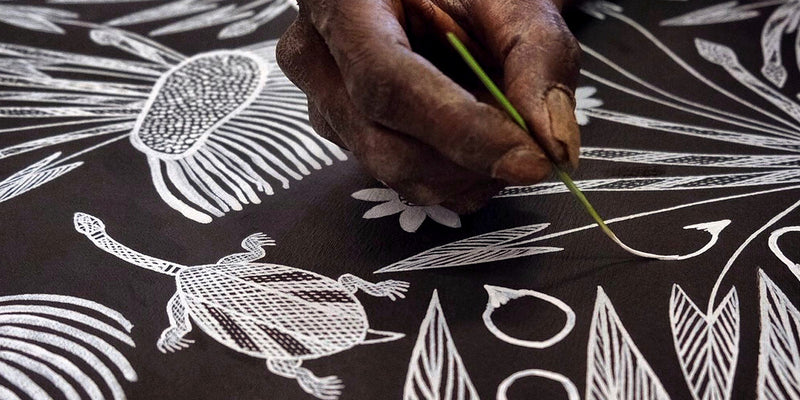
The art centre building is itself a cultural statement: designed to resemble a Wandjina face when viewed from the air, it houses working studios, a gallery, a museum opened in 2021, an archive, and a performance area. The Wandjina are the sacred creator beings of the west Kimberley, depicted across ancient rock art sites of the North Kimberley coast in one of the world's great concentrations of ancient imagery. At Mowanjum, artists continue this tradition on canvas and board, painting Wandjina figures alongside Gyorn Gyorn (Bradshaw figures) and Ungud totem animals using ochres drawn from their respective country. Around 120 artists from across the three language groups work at the centre. The annual Mowanjum Festival in July, one of Australia's longest-running Indigenous cultural festivals, brings community members together to share junba (songs), ceremony and dance. Donny Woolagoodja, who received the Australia Council Red Ochre Award in 2021 for lifetime contribution to Aboriginal arts, died in 2022. Current artists including Gordon Barunga, Sandra Mungulu, Leah Umbagai and Cecilia Umbagai carry the tradition forward.
Mowanjum Art and Culture Centre at a glance
- Location: 10km east of Derby on the Gibb River Road, West Kimberley, Western Australia
- Language groups: Worrorra (Woddordda), Ngarinyin, Wunambal; all three are custodians of Wandjina law and iconography
- Established: 1998; Indigenous owned and governed not-for-profit
- Art forms: Ochre painting on canvas and board; Wandjina figures, Gyorn Gyorn, Ungud totems; printmaking, carving, photography, textiles
- Notable artists: Donny Woolagoodja (1947–2022), first chairman and 2021 Red Ochre Award recipient; Gordon Barunga, Sandra Mungulu, Leah Umbagai, Cecilia Umbagai
- Annual event: Mowanjum Festival, July school holidays; one of Australia's longest-running Indigenous cultural festivals
- Museum: Opened 2021; houses the historic Selsmark Collection of dance totems, costumes and instruments made by senior Worrorra, Ngarinyin and Wunambal men and women in the 1970s