25 Famous Aboriginal Artists You Should Know
Influential Aboriginal Artists in Australian Art
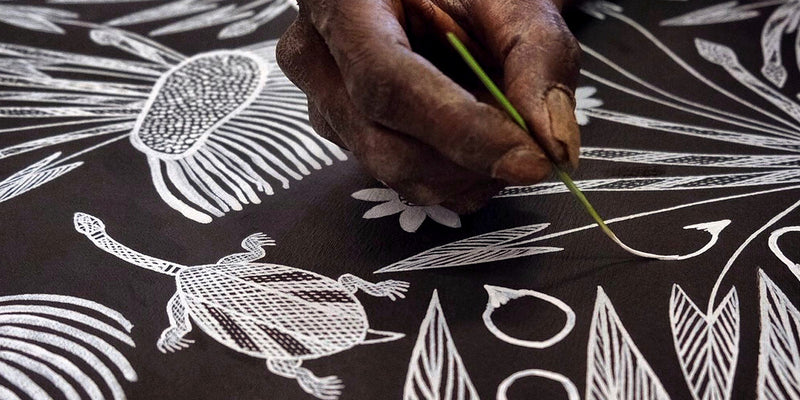
Australian Aboriginal art encompasses one of the world's oldest continuous cultural traditions, with documented practices spanning tens of thousands of years. Aboriginal artists work across a vast range of media and approaches, from bark painting and watercolour to photography, video and installation, while drawing on the Dreamtime stories, country, and ceremonial knowledge that underpin their communities. Many also engage directly with the history of colonisation, land rights, and the ongoing realities of Indigenous identity in contemporary Australia.
The following list introduces 25 famous Aboriginal artists whose works have shaped both the Australian and international art scenes. It spans the pioneering watercolours of Albert Namatjira in the 1930s and 40s, the founding of the Papunya painting movement in 1971, and the groundbreaking contemporary practices of artists like Tracey Moffatt and Richard Bell, reflecting the diversity and depth of Aboriginal art across regions, generations and disciplines.
These 25 artists represent a cross section of a much broader community of practice. From desert painters in Western Australia and the Northern Territory to urban conceptual artists in Brisbane and Sydney, they work in different traditions, for different audiences, and with different intentions, united by the fact that their art carries cultural knowledge and personal history that no other tradition can replicate.
Above Image: The Men's Painting Shed in Papunya, 1972
-
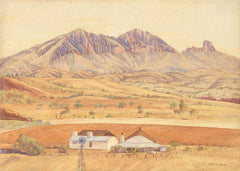
Albert Namatjira was the first Aboriginal artist to achieve national fame in Australia, painting the ghost gums and ranges of his Arrernte country in watercolour and gaining Australian citizenship in 1957, fourteen years before other Aboriginal people could.
-
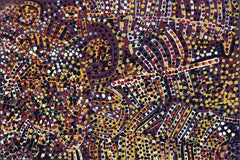
Emily Kame Kngwarreye began painting on canvas at around 78 and in the eight years before her death in 1996 produced an estimated 3,000 works, becoming one of the most collected Aboriginal artists in history and the subject of a major retrospective at the NGA and NGV.
-
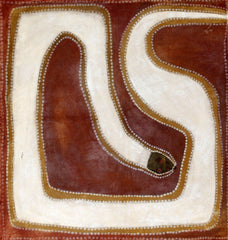
Rover Thomas developed a distinctive East Kimberley painting style using natural ochres and charcoal on board, representing Australia at the 1990 Venice Biennale alongside Trevor Nickolls as the first Aboriginal artists to do so.
-

Fiona Foley is a Badtjala artist from Fraser Island whose photography, sculpture and installation address the opium trade with Aboriginal communities in Queensland, the Stolen Generations, and the enduring consequences of colonial settlement.
-
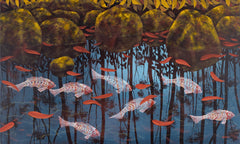
Lin Onus was the son of a Yorta Yorta man and a Scottish woman whose practice drew on both Arnhem Land clan designs learned from Djinang elder Jack Wunuwun and a Pop Art aesthetic, combining them in works including his fibreglass fruit bats suspended in real rainforest trees.
-
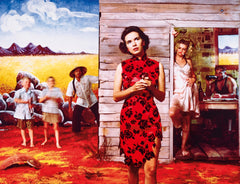
Tracey Moffatt is a Brisbane-born photographer and filmmaker who represented Australia at the 1997 Venice Biennale, producing staged photographic series including Something More (1989) and Laudanum (1999) that draw on cinema, advertising and colonial imagery.
-
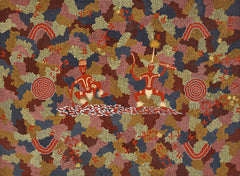
Clifford Possum Tjapaltjarri was one of the founding painters of the Papunya art movement in 1971 and created Warlugulong (1977), a 168 x 170cm map of Dreaming tracks across the Western Desert that sold for $2.4 million in 2007.
-
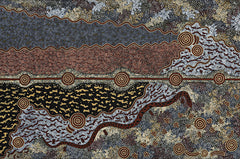
Michael Jagamara Nelson AM is a Warlpiri/Luritja painter from Papunya whose five-panel mosaic forecourt at Parliament House in Canberra, completed in 1988, depicts the Seven Sisters Dreaming and remains one of the most publicly visible Aboriginal artworks in Australia.
-

Noŋgirrŋa Marawili was a Maḏarrpa elder from northeast Arnhem Land who began painting in her own name after her husband's death and won the Telstra bark painting award in 2015 and 2019, with works now held in the Tate Modern and the Metropolitan Museum of Art.
-
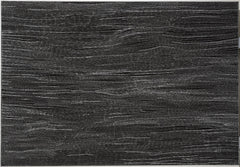
Dorothy Napangardi was a Warlpiri painter from Mina Mina whose densely layered white-on-black works mapping the salt pans and ceremonial paths of her country earned her the 2001 National Aboriginal and Torres Strait Islander Art Award before her death in 2013.
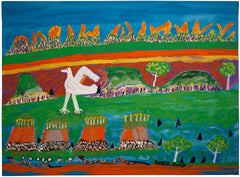
Ginger Riley Munduwalawala was a Marra saltwater man from southeast Arnhem Land who began painting in 1986 and in 1997 became the first living Aboriginal artist to be honoured with a major retrospective at the National Gallery of Victoria, titled Mother Country in Mind.-
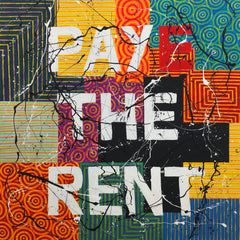
Richard Bell is a Kamilaroi/Kooma political artist and co-founder of proppaNOW whose 2002 manifesto declaring that Aboriginal art is a white thing sparked a national debate, and whose ongoing work Embassy recreating the Aboriginal Tent Embassy has been installed at documenta 14 and institutions worldwide.
-

Mirdidingkingathi Juwarnda Sally Gabori was a Kaiadilt woman from Bentinck Island who began painting at approximately 80 years of age and in six years produced a body of abstract work that entered the collections of the NGA, NGV, Tate Modern and the Metropolitan Museum of Art.
-

Destiny Deacon is a Kuku and Erub/Mer photographer and video artist who uses found plastic toys, kitsch props and staged domestic settings to examine the everyday reality of urban Aboriginal life with a darkly comic sensibility.
-
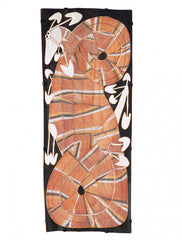
John Mawurndjul is a Kuninjku bark painter from Milkijduk in Arnhem Land and a master of rarrk crosshatching whose work entered the collection of the Musée du quai Branly in Paris and was the subject of a major retrospective at the Museum Tinguely in Basel in 2005.
-

Tony Albert is a Girramay, Yidinji and Kuku Yalanji artist from Townsville who coined the term Aboriginalia to describe the kitsch objects he collected as a child, and in 2012 became the first Aboriginal Australian appointed as an official war artist.
-
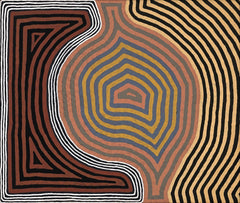
Ronnie Tjampitjinpa was one of the youngest founding painters of Papunya Tula Artists in 1971 and a strong advocate for the outstation movement, returning to his country near Kintore in 1983 after spending much of the 1970s working for land rights rather than painting.
-
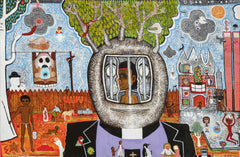
Trevor Nickolls was a Ngarrindjeri painter from Port Adelaide who developed the concept of Dreamtime to Machinetime to describe the collision of Aboriginal and industrial worlds, and in 1990 represented Australia at the Venice Biennale alongside Rover Thomas as the first Aboriginal artists to do so.
-
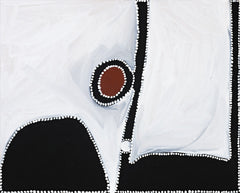
Paddy Bedford was a Gija lawman from Bedford Downs Station whose paintings on board were discovered destined for a rubbish tip in the late 1990s, with his 2006 MCA retrospective and inclusion in the Musée du quai Branly's inaugural commission establishing him as one of the most significant Aboriginal artists of his generation.
-
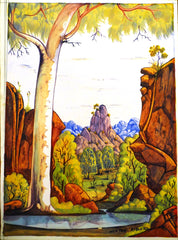
Wenten Rubuntja was an Arrernte lawman and artist from Alice Springs who in 1976 led over a thousand Aboriginal people through the town demanding land rights, co-presented the Barunga Statement to Prime Minister Bob Hawke in 1988, and painted in both the Hermannsburg watercolour and Papunya dot traditions.
-
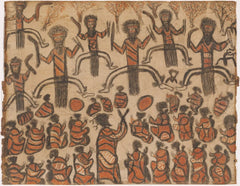
William Barak was the Wurundjeri Ngurungaeta who witnessed the Batman Treaty signing as a boy in 1835, led 22 men on foot from Coranderrk to Parliament House in 1881 to argue against the station's closure, and created over 50 charcoal drawings recording ceremonies that residents were officially forbidden to observe.
-
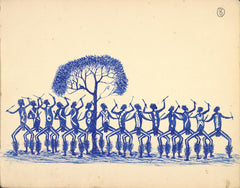
Tommy McRae was a Kwatkwat artist from Lake Moodemere on the Murray who worked in pen and ink, lying on the ground propped on one elbow and building figures from the feet up, and in 1897 sued a photographer who failed to pay him £10 promised for photographing Aboriginal people at his camp.
-
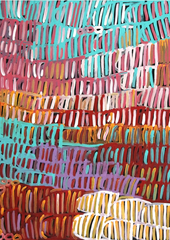
Minnie Pwerle was an Anmatyerre and Alyawarre woman from Atnwengerrp near the Sandover River who spent a lifetime applying body paint to women's ceremony participants before taking up canvas painting at approximately 80 years of age, encouraged by her daughter Barbara Weir.
-
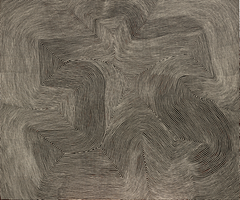
Warlimpirrnga Tjapaltjarri was one of the Pintupi Nine who walked out of the Gibson Desert in October 1984 after a lifetime with no contact with the outside world, began painting for Papunya Tula Artists three years later, and is now represented by Gagosian.
-
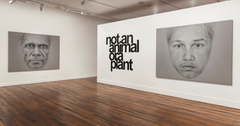
Vernon Ah Kee is a Kuku Yalandji and Gugu Yimithirr artist from Innisfail who co-founded the Brisbane collective proppaNOW in 2004 and represented Australia at the 53rd Venice Biennale in 2009, working across large-scale portraiture, text-based works, and video installation addressing race and colonial history.
These 25 artists are a starting point. Many others deserve equal attention, and the full breadth of Aboriginal and Torres Strait Islander art across regions, generations and disciplines is far wider than any single list can represent.