Types of Aboriginal Art
The main types of Aboriginal art include dot painting, bark painting, rock art, ochre artworks, sculpture, and ceremonial forms. Each type reflects a distinct cultural region, artistic method, and relationship to Country. Aboriginal art is the world’s oldest continuous art tradition, expressing ancestral stories, laws, and identity through painting, carving, and ceremony. From the fine cross-hatching of Arnhem Land to the desert’s dotted Dreaming maps, every style is part of a living visual language that connects past and present.
The sections below outline key types of Aboriginal art and link to detailed guides on their origins, materials, and cultural meanings.
Dot Painting
Aboriginal Dot Painting is a distinctive art form created by Aboriginal Peoples of the Central and Western Desert. These paintings are both modern and ancient, connecting the artist’s contemporary life to ancestral stories and the Dreaming. Originating in the early 1970s at Papunya, dot painting developed as artists began to translate ceremonial ground designs and body markings onto canvas. The dots often conceal sacred knowledge while revealing pathways, symbols, and stories that speak of the land and its spirit. Each painting represents both a personal expression and a continuation of cultural law.
Explore Aboriginal Dot Painting
Bark Painting and Cross-Hatching
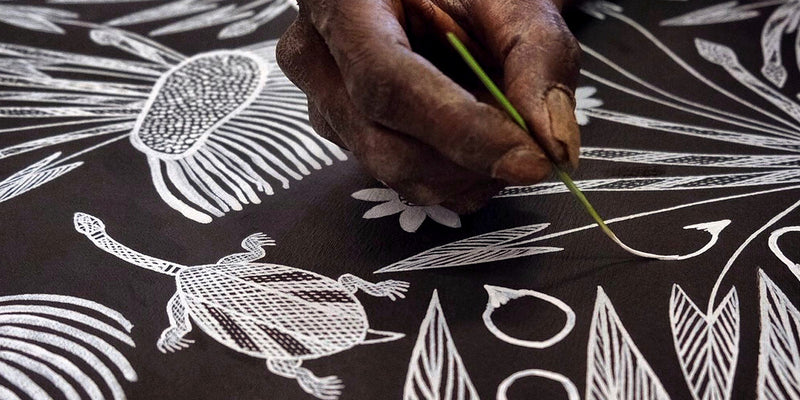
Bark painting is a traditional art form from Arnhem Land and nearby regions. Artists harvest sheets of eucalyptus bark, cure them over fire, and paint using natural ochres. These works often feature rarrk or miny’tji, intricate cross-hatching patterns that represent sacred clan designs. Each stroke is painted with fine hairbrushes made from reeds or human hair. Bark paintings were originally created for ceremonial and instructional purposes, yet they remain a central art form, balancing ancestral law with innovation. The discipline, patience, and rhythm within each line express the artist’s deep knowledge of Country.
Read about Bark Painting traditions
Discover Rarrk and Miny’tji cross-hatching
Ochre Artworks
Ochre is one of the oldest artistic materials used by Aboriginal Peoples. It is a naturally tinted clay that occurs in many colours, from rich reds and yellows to white and dark brown. The use of ochre dates back tens of thousands of years, with cave paintings and rock markings across Australia providing a window into ancient life and belief. Ground and mixed with binders such as fat or water, ochre became both pigment and symbol, carrying ceremonial and spiritual importance. Today, artists continue to use ochre to link their work with the oldest known art traditions on Earth.
See how Ochre is used in Aboriginal Art
Sculpture and Spirit Figures
Sculpture in Aboriginal art often represents ancestral beings and spirits. In Arnhem Land, artists carve Mimih figures, tall and slender spirits believed to live in rock crevices. Warraburnburn represent ghost spirits, while Yawkyawk figures embody water women or fish-spirit ancestors. Mokuy figures are guardians of Yolŋu law and morality. These sculptures are carved from local timber and painted with natural pigments, linking the spiritual world with the everyday. They are powerful expressions of belief and identity, often created for ceremony and now shared as artworks that preserve cultural stories.
Learn more about them:
Larrakitj and Lorrkon: Hollow Logs
Larrakitj and Lorrkon are hollow log forms from Arnhem Land that once served ceremonial and funerary purposes. Traditionally, they were used to house the bones of the deceased after secondary burial ceremonies. In contemporary practice, these hollow logs have become important sculptural artworks. They are painted with sacred clan designs and ancestral motifs, each one a connection between the physical and spiritual worlds. The transformation of Larrakitj and Lorrkon into art pieces continues the tradition of honouring the ancestors while sharing culture with new audiences.
Read about Larrakitj and Lorrkon hollow logs
Rock Art
Rock art is the oldest continuous artistic practice in Australia. Found across the continent, it records Dreaming stories, ancestral beings, and historical events such as first contact with Europeans. Rock shelters and escarpments in Arnhem Land, the Kimberley, and Western Desert hold countless painted and engraved images that continue to inform community knowledge and identity. These works are not relics of the past but part of living cultural landscapes. Many are still cared for by Traditional Owners who maintain the stories and responsibilities attached to each site.
Explore Australia’s ancient Rock Art
Each form of Aboriginal art carries knowledge that cannot be separated from Country or community. Whether painted, carved, or incised, these artworks continue the world’s oldest tradition of visual storytelling. They connect the past with the present and ensure that Aboriginal voices, histories, and landscapes remain visible to future generations.