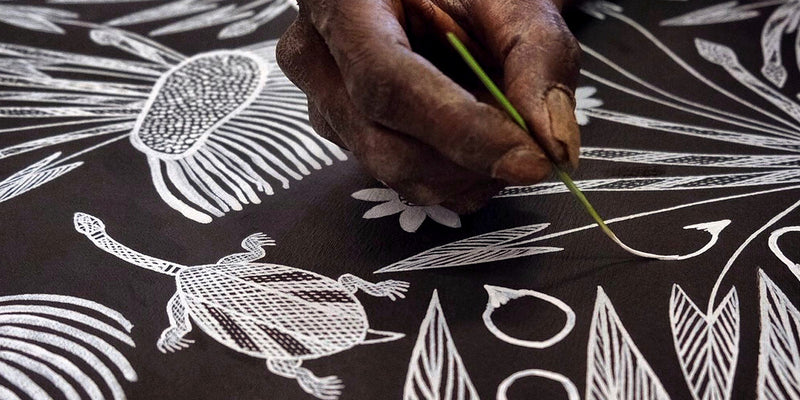
Alison Kuwanjguwanj, Saratoga, 148cm
Original artwork certified by the community art centre.
Community Certified Artwork
This original artwork is sold on behalf of Maningrida Arts and Culture, a community-run art centre. It includes their Certificate of Authenticity.
– Original 1/1
- Details
- Artwork
- Artist
- Aboriginal Artist - Alison Kuwanjguwanj
- Community - Maningrida
- Homeland - Korlobidahdah
- Aboriginal Art Centre - Maningrida Arts and Culture
- Catalogue number - 1361-25
- Materials - Pandanus and bush cane, with natural dyes
- Size(cm) - W148 H52
- Postage - Posted flat
It is well known that Aboriginal art often depicts images of sacred totems or dreamings of Aboriginal culture. However, the world of the non-sacred also provides a rich source of subject matter for Aboriginal art. Much of the rock art of western Arnhem Land for example features secular topics such as common food animals and plants, depicted because of their economic importance but also merely because of their existence in the environment.
This weaving is of a ngaldadmurrng saratoga fish [Scleropages jardini] sometimes also called the Northern Spotted Barramundi. Saratoga are commonly found in creeks, rivers and billabongs around the artist's clan estate. The animals depicted are on one level easy to recognize and their meaning is easily accessible. On a deeper level the animals are depicted with intense rarrk — cross-hatched — infill which creates a reference to Mardayin ceremonial mysticism.
Saratogas make their nests on the bottom of river beds in the sand by digging with their tails and fins and lay eggs into these depressions. During mortuary rituals the Kuninjku imitate these nests in sand sculpture. At the end of funerals all those who have attended the funeral are required to stand in the 'saratoga's nest' and they are doused with water to be cleansed from the polluting effects of the deceased.
A large meteorite crater near Mumeka in the Liverpool River district is said to be the nest of the saratoga which now stands in the landscape as djang — a sacred site.
Alison Kuwanjguwanj learned to weave from her mother Frewa Bardaluna, a master fibre artist who had numerous exhibitions with leading Australian commercial galleries. Alison’s work is distinguished by her soft tonal range, strong sense of design and intricate technique.
Alison predominately uses gun-menama (pandanus spiralis) it make woven panels, dilly bags and 2D sculptures of animals and yawkyawks (female water spirits). To prepare the pandanus the inner leaves of the plant are collected using a hook. Each V-shaped leaf is first split in half along its spine. After removing the sharp spines, the two surfaces of the leaf are then split away from other. After this preparation, the pandanus is boiled in a billycan with plant materials to dye the fibre. Like her contemporaries, Alison only uses natural dyes and achieves enormous variation. Common colours in her work include:
– barra gu-jirra: the soft, white and fleshy end of the pandanus leaf imparts green to the fibre.
– mun-gumurduk/ gala (Pogonolobus reticulatus): a bright yellow root that is crushed and put in a billycan with the fibre and boiled. It creates yellow when boiled once and deep orange hues when boiled multiple times.
– ngalpur (Haemodorum brevicaule): a bright red root which yields a range of purply red to brown colours.
– Baluk: ashes of certain plants are added to the boiling billycan with the fibre and dye plants to alter the colour that is imparted to the fibre. The fruiting body of gulpiny (Banksia denanta) is burnt and the ashes added to other day plants to make the colour pink.
(Margie West, 1995, Maningrida – the Language of Weaving)
"Arrived safely in perfect condition. Love it." - Shirley, USA – ART ARK Customer Review
Arnhem Land Art from the Maningrida Homelands
This artwork comes from Maningrida Arts & Culture, based on Kunibídji country in Arnhem Land. Artists live across homelands spanning more than 7,000 square kilometres of land and sea and over 100 clan estates where many distinct languages are spoken and people continue to live on Country.
— Image: Freda Ali Wayartja harvesting pandanus, Maningrida Arts & Culture