Life is better with art!
  • Aboriginal Artwork by Ŋoŋu Ganambarr, Guḏurrku - Brolga Sculpture
  • Aboriginal Artwork by Ŋoŋu Ganambarr, Guḏurrku - Brolga Sculpture
  • Aboriginal Artwork by Ŋoŋu Ganambarr, Guḏurrku - Brolga Sculpture
  • Aboriginal Artwork by Ŋoŋu Ganambarr, Guḏurrku - Brolga Sculpture

Ŋoŋu Ganambarr, Guḏurrku - Brolga Sculpture

  • 120-day returns
  • Free insured post
  • Posts from Tasmania in 1 business day
  • Colour-accurate images

Community Certified Artwork

This original artwork is sold on behalf of the community-run art centre. It includes their Certificate of Authenticity.

  • Aboriginal Artist - Ŋoŋu Ganambarr
  • Community - Yirkala
  • Homeland - Rorruwuy
  • Aboriginal Art Centre - Buku-Larrŋgay Mulka Centre
  • Catalogue number - 3507-20
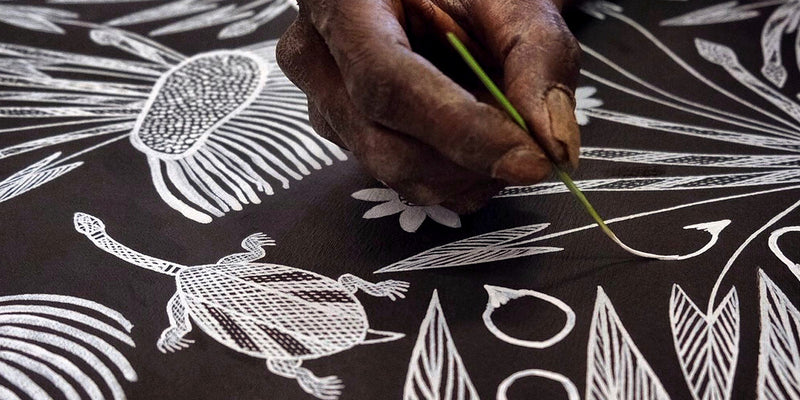
  • Materials - Earth pigments on native hibiscus
  • Size(cm) - H103 W8 D26

This work identifies the reservoirs of the Ŋaymil/Ḏäṯiwuy clan. Ŋalkan is an area on Ŋaymil land and sea between the Gurrumuru and Cato Rivers that run into the Arnhem Bay. Within this area is another watercourse that leads up into a sacred area of a freshwater spring or Milŋurr with special qualities called Darrawuy. Here Djanda the sacred goanna swim in the lagoon created by the spring, their actions as they swim causing patterns to be made on the surface that is covered by the totemic water weed Darra. The sacred clan design is a manifestation of these patterns created at Darrawuy lagoon. The Djaŋ'kawu story starts when the Djaŋ’kawu Sisters arrived from their mythical island Burralku. They arrived in northeast Arnhem land at sunrise. Indeed, the name given to this part of Australia is Miwatj, or Morning Side, referring to the fact that this is the first part of the Top End to see the morning sun. Matalatj (the elder sister who gives birth later in the story) and Bitjiwurrurru (her younger sister who acts as a midwife) have just paddled their canoe a long way and then climbed the sand dunes to where they stop for a rest as the sun rises. The sun's rays strike the Buwaṯa (English name Bustard) and reflect off the water. As this happens the Sisters sing Buwaṯa and name it. They do the same as the sun strikes two other important Dhuwa birds; Ḻindirritj (rainbow lorikeet) and Ŋatili (black cockatoo). The Sisters put their paddles down and they turned into the sacred djuta tree from which they hung their ceremonial bathi or sacred dilly bags. Gowudalbudal (the male shining flycatcher) who sings the tide coming in or going out sat on one of those trees. The sisters named Guḏurrku (Brolga) and Baribari (Sacred Ibis). This song spiral continues on through all Dhuwa moiety clan lands. The area depicted in the pattern is a massive floodplain. The plain is tidal and during the wet seasons, it is flooded by the rains and tidal surge creating areas of brackish water. During the dry season, the grass and black earth dry out. Then the fires come, turning a swamp into a huge plain of cracked black earth. Freshwater springs dot this sun-baked plain forming small islands of vegetation and as Rarrandada (the hot time) builds the thirsty birds come to these sacred springs in their thousands. The noise of the guḏurrku or dhaŋgultji (brolgas) and gurrumaṯji (magpie geese) are deafening, the mud scored with their tracks, and the sky dark with the flocks of wheeling birds. The Brolga famously dance their balletic mating dance which is mimicked in Yolŋu buŋgul by the Däṯiwuy and other Dhuwa clans. The Djaŋ’kawu - the Dhuwa moiety Creator Beings, in naming this country for the Däṯiwuy, created these sacred freshwater spring-fed waterholes by plunging their sacred digging sticks in the ground. Freshwater sprung from these wells as did a sacred goanna, a manifestation in some circles of the Djaŋ’kawu themselves. The story has it that on surfacing the goanna saw the first sun rise. Also on the wet clays around the wells, the goanna observed the footprints of Daŋgultji the Brolga. The prints of the Brolga passing from spring to spring are an echo and a present-day manifestation of the Sisters who adopted the form of the brolga in their travels between springs.

Details currently unavailable

Buku-Larrŋgay Mulka Centre is the Indigenous community-controlled art centre of Northeast Arnhem Land. Located in Yirrkala, a small Aboriginal community on the north-eastern tip of the Top End of the Northern Territory, approximately 700km east of Darwin. Our primarily Yolŋu (Aboriginal) staff of around twenty services Yirrkala and the approximately twenty-five homeland centres in the radius of 200km.

In the 1960’s, Narritjin Maymuru set up his own beachfront gallery from which he sold art that now graces many major museums and private collections. He is counted among the art centre’s main inspirations and founders, and his picture hangs in the museum. His vision of Yolŋu-owned business to sell Yolŋu art that started with a shelter on a beach has now grown into a thriving business that exhibits and sells globally.

Buku-Larrŋgay –  “the feeling on your face as it is struck by the first rays of the sun (i.e. facing East) 

Mulka – “a sacred but public ceremony.”

In 1976, the Yolŋu artists established ‘Buku-Larrŋgay Arts’ in the old Mission health centre as an act of self-determination coinciding with the withdrawal of the Methodist Overseas Mission and the Land Rights and Homeland movements.

In 1988, a new museum was built with a Bicentenary grant and this houses a collection of works put together in the 1970s illustrating clan law and also the Message Sticks from 1935 and the Yirrkala Church Panels from 1963.

In 1996, a screen print workshop and extra gallery spaces was added to the space to provide a range of different mediums to explore. In 2007, The Mulka Project was added which houses and displays a collection of tens of thousands of historical images and films as well as creating new digital product. 

Still on the same site but in a greatly expanded premises Buku-Larrŋgay Mulka Centre now consists of two divisions; the Yirrkala Art Centre which represents Yolŋu artists exhibiting and selling contemporary art and The Mulka Project which acts as a digital production studio and archiving centre incorporating the museum.


Text courtesy: Buku-Larrŋgay Mulka Centre

"We love the weavings and they will complement our other purchases from Guy. The artworks were posted the next day and received two days later, with regular updates from Guy. It's important to us that these works are ethically bought." - Wendy, Aus

– Read all 1,680+ ART ARK Customer Reviews

← Previous Page Arnhem Land Weaving Arnhem Land Art Dot Paintings Subscribers Stretched Paintings Desert Weavings Landscape Paintings


Remote Aboriginal artists share their culture through art

Supporting Aboriginal Artists

By sharing their culture, remote artists create opportunities for themselves. Buying Aboriginal art ethically supports these artists while bringing warmth and meaning into your home.


Aboriginal artwork displayed in a home

Original Art That Will Look Great at Your Place

Beautiful, original art that fits perfectly into your home. Your purchase supports Aboriginal artists and helps us continue our mission in celebrating and promoting ethical Aboriginal art.

We're confident you will love your artwork, but if it’s not right for any reason, return it within 120 days. Easy. Over 1,680 past customers have shared their experiences, and they love their artworks.

Reserving a Work

You're welcome to secure a work with a 20% deposit. Use code DEPOSIT20 at checkout and settle the balance within 30 days (we'll email you an invoice).

Deposits are non-refundable, but once paid in full your artwork ships as normal, covered by our 120-day returns.


Aboriginal painting in situ with the certificate of authenticity shown

Authenticity Certified by Community Art Centres

Only certificates from community-based Aboriginal art centres guarantee ethical sourcing, ensuring your purchase supports the artist and their community. Every ART ARK® piece includes this documentation, offering transparency and trust in its origin. Proof of provenance ensures authenticity and contributes to the artwork’s long-term value.

Learn more about Aboriginal Art Authenticity.


Aboriginal artwork being photographed and colour corrected

Colour Accuracy Guaranteed

We spend hours to ensure your artwork will arrive as shown. Carefully packed, colour-accurate, and ready to love.

Colours are matched as closely as possible, and with returns under 0.2%, our customers are consistently delighted with their artworks.


Example of an Aboriginal painting framed in a float frame

Framing Aboriginal Art

We keep pricing transparent by delivering artworks without added third-party costs, allowing us to offer free shipping and maintain pricing in accordance with each art centre. Canvas and linen pieces are sent rolled for safe delivery and easy re-stretching at your local framer.

Learn more about Framing Aboriginal Art.


Worldwide shipping from ART ARK

Fast, Free Post

From Tasmania to your doorstep, no matter where you are in the world. Orders ship within 1 business day and arrive in 1 to 3 days within Australia and 5 to 10 days internationally. Enjoy free domestic shipping on all orders. International shipping is free for orders over A$500, and a flat rate of A$30 applies for orders under that amount.

Customs & Duties: Original artworks (tariff codes 9701.91 for paintings and drawings, 9703.00 for sculptures) are duty and tax-free when arriving in the United States and Canada. The UK applies a reduced VAT of 5%, France 5.5%, and Germany 7%. Other countries may have different rates, so we recommend checking before purchase.

*Estimated delivery for international shipments is 5–10 business days, not including any customs processing time, which varies by country.

Learn more about Customs and Shipping.


arty emails? (they're good)