Ngukurr Arts is home to talented artists such as Gwenneth Blitner and Wally Wilfred. Gwenneth Blitner is celebrated for her beautiful depictions of the natural world and community life, using a vibrant colour palette and detailed brushwork. Wally Wilfred is known for his intricate carvings and paintings that capture the spiritual and cultural stories of his ancestors. Both artists continue to push the boundaries of contemporary Aboriginal art while maintaining a strong connection to their cultural roots.
Continue reading →
The art centre was founded by the late Balang T.E. Lewis, a renowned Jawoyn elder, artist, and actor. He envisioned Djilpin Arts as a way to sustain and promote traditional culture while creating economic opportunities for the community.
Continue reading →
Bima Wear is an Aboriginal enterprise located on the Tiwi Islands, off the coast of Northern Territory It was established in 1969, making it one of the earliest Indigenous textile enterprises in Australia.
Continue reading →
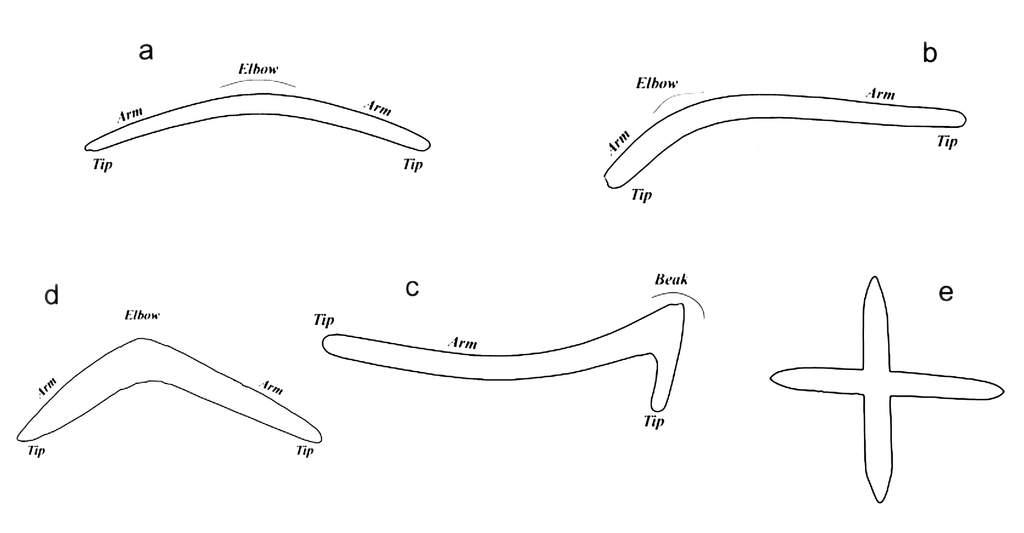
The boomerang is an iconic symbol of Australia and a significant part of Aboriginal culture These intricately designed tools hold deep historical and cultural significance, reflecting the craftsmanship and ingenuity of Aboriginal communities. The diverse styles of boomerangs found across Australia illustrate the variety of uses and regional influences that have shaped their designs over thousands of years. Types of boomerang, and denomination of its morphological components; (a) symmetrical boomerang, (b) asymmetrical boomerang, (c) beaked or hooked boomerang, (d) returning boomerang, (e) cross-boomerang. (Drawings by E. F. Martellotta) In northern Australia, particularly in Arnhem Land, boomerangs are crafted with a distinct, elongated shape, often symmetrical and rounded. This design is ideal for hunting and combat, allowing for straight flights that...
Continue reading →
The story of Bábbarra intertwines with the Djomi, as they are considered sisters, one a freshwater mermaid and the other a saltwater one. Bábbarra resides in the Bábbarra billabong, a sacred women's site, where her presence and that of the Djomi imbue the place with spiritual power.
Continue reading →
The term "Mokuy" encompasses a diverse array of spirit beings, each with its own unique characteristics and significance. From mischievous tricksters to benevolent protectors, Mokuy inhabit the rich landscape of Yolŋu mythology, embodying the essence of the natural world and its mysteries.
Continue reading →
Renowned internationally for their skill in both making and playing the instrument, Yolŋu artisans meticulously select termite-hollowed tree stems to fashion into Yiḏaki with desired acoustics, ranging from high-pitched melodies to deep, resonant tones
Continue reading →
Yawkyawk are often likened to the mythical mermaids of European tales. These ethereal entities hold a revered place in indigenous Australian mythology, weaving their enchanting presence into the cultural fabric of the land.
Continue reading →
Central to ceremonies and rituals, the Warraburnburn and Galabarrbarr spirits take centre stage during funeral proceedings, serving as the final farewell to departed loved ones. Their ethereal dance symbolises the transition from this world to the next, carrying the spirits of the deceased to their final resting place.
Continue reading →
One of the most intriguing aspects of Mimih mythology is their association with rock art. It is said that the Mimihs were the original artists, responsible for painting the intricate and enigmatic figures that adorn the rocky outcrops and cave walls of Arnhem Land.
Continue reading →