Life is better with art!
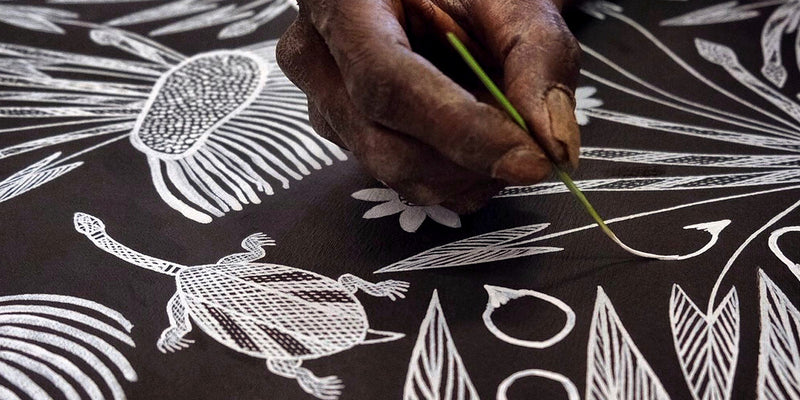
  • Aboriginal Artwork by Alison Kuwanjguwanj, Yawkyawk (, fish, and stingray) 96x87cm
  • Aboriginal Artwork by Alison Kuwanjguwanj, Yawkyawk (, fish, and stingray) 96x87cm
  • Aboriginal Artwork by Alison Kuwanjguwanj, Yawkyawk (, fish, and stingray) 96x87cm

Alison Kuwanjguwanj, Yawkyawk (, fish, and stingray) 96x87cm

Made from naturally dyed pandanus, this beautiful weaving was created in Maningrida, Arnhem Land.
  • 120-day returns
  • Free insured post
  • Posts from Tasmania in 1 business day
  • Colour-accurate images
Maningrida Arts and Culture Certificate of Authenticity

Community Certified Artwork

This original artwork is sold on behalf of Maningrida Arts and Culture, a community-run art centre. It includes their Certificate of Authenticity.

  • Aboriginal Artist - Alison Kuwanjguwanj
  • Community - Maningrida
  • Homeland - Korlobidahdah
  • Aboriginal Art Centre - Maningrida Arts and Culture
  • Catalogue number - 1273-25
  • Materials - Pandanus and bush cane, with natural dyes
  • Size(cm) - H96 W87
  • Postage - Posted flat

Yawkyawk is a word in the Kunwinjku/Kunwok language of Western Arnhem Land meaning ‘young woman’ and ‘young woman spirit being’. The different groups of Kunwinjku people (one of the Eastern dialect groups call themselves Kuninjku) each have Yawkyawk mythologies, which relate to specific locations in clan estates. These mythologies are represented in bark paintings and sculptures of Yawkyawk beings. There are also a few examples of rock art images of these beings.
The female water spirits Yawkyawk or Ngalkunburriyaymi are perhaps the most enigmatic of mythological themes. Sometimes compared to the European notion of mermaids, they exist as spiritual beings living in freshwater streams and rock pools, particularly those in the stone country. The spirit Yawkyawk is usually described and depicted with the tail of a fish. Thus the Kuninjku people sometimes call them ngalberddjenj which literally means ‘the young woman who has a tail like a fish’. They have long hair, which is associated with trailing blooms of green algae (called man-bak in Kuninjku). At times they leave their aquatic homes to walk about on dry land, particularly at night.
Aboriginal people believe that in the beginning most animals were humans. During the time of the creation of landscapes and plants and animals, these ancestral heroes in human form transmutated into their animal forms via a series of various significant events now recorded as oral mythologies. The creation ancestor Yawkyawk travelled the country in human form and changed into the form of Ngalkunburriyaymi as a result of various ancestral adventures. Today the Kuninjku believe that Ngalkunburriyaymi are alive and well and living in freshwater sites in a number of sacred locations.
Some features of a respective country are equated with body parts of Yawkyawk. For example a bend in a river or creek may be said to be ‘the tail of the Yawkyawk, a billabong may be ‘the head of the Yawkyawk and so on. Thus different groups can be linked together by means of a shared mythology featured in the landscape, which crosscuts clan and language group boundaries.

Alison Kuwanjguwanj learned to weave from her mother Frewa Bardaluna, a master fibre artist who had numerous exhibitions with leading Australian commercial galleries.  Alison’s work is distinguished by her soft tonal range, strong sense of design and intricate technique.

Alison predominately uses gun-menama (pandanus spiralis) it make woven panels, dilly bags and 2D sculptures of animals and yawkyawks (female water spirits). To prepare the pandanus the inner leaves of the plant are collected using a hook. Each V-shaped leaf is first split in half along its spine. After removing the sharp spines, the two surfaces of the leaf are then split away from other. After this preparation, the pandanus is boiled in a billycan with plant materials to dye the fibre. Like her contemporaries, Alison only uses natural dyes and achieves enormous variation. Common colours in her work include:

– barra gu-jirra: the soft, white and fleshy end of the pandanus leaf imparts green to the fibre.

–  mun-gumurduk/ gala (Pogonolobus reticulatus): a bright yellow root that is crushed and put in a billycan with the fibre and boiled. It creates yellow when boiled once and deep orange hues when boiled multiple times.

– ngalpur (Haemodorum brevicaule): a bright red root which yields a range of purply red to brown colours.

– Baluk: ashes of certain plants are added to the boiling billycan with the fibre and dye plants to alter the colour that is imparted to the fibre. The fruiting body of gulpiny (Banksia denanta) is burnt and the ashes added to other day plants to make the colour pink. 

(Margie West, 1995, Maningrida – the Language of Weaving)


Arnhem Land Art from the Maningrida Homelands

Arnhem Land Art from the Maningrida Homelands

This artwork comes from Maningrida Arts & Culture, based on Kunibídji country in Arnhem Land. Artists live across homelands spanning more than 7,000 square kilometres of land and sea and over 100 clan estates where many distinct languages are spoken and people continue to live on Country.

— Image: Freda Ali Wayartja harvesting pandanus, Maningrida Arts & Culture

"This is our second purchase from Art Ark and we just could not be happier. We are also very happy with how this company works with artists and communities in ensuring that it does so fairly and ethically. Thrilled!!" - Milena, Aus

– Read all 1,680+ ART ARK Customer Reviews

← Previous Page Arnhem Land Weaving Arnhem Land Art Dot Paintings Subscribers Stretched Paintings Desert Weavings Landscape Paintings


Remote Aboriginal artists share their culture through art

Supporting Aboriginal Artists

By sharing their culture, remote artists create opportunities for themselves. Buying Aboriginal art ethically supports these artists while bringing warmth and meaning into your home.


Aboriginal artwork displayed in a home

Original Art That Will Look Great at Your Place

Beautiful, original art that fits perfectly into your home. Your purchase supports Aboriginal artists and helps us continue our mission in celebrating and promoting ethical Aboriginal art.

We're confident you will love your artwork, but if it’s not right for any reason, return it within 120 days. Easy. Over 1,680 past customers have shared their experiences, and they love their artworks.

Reserving a Work

You're welcome to secure a work with a 20% deposit. Use code DEPOSIT20 at checkout and settle the balance within 30 days (we'll email you an invoice).

Deposits are non-refundable, but once paid in full your artwork ships as normal, covered by our 120-day returns.


Aboriginal painting in situ with the certificate of authenticity shown

Authenticity Certified by Community Art Centres

Only certificates from community-based Aboriginal art centres guarantee ethical sourcing, ensuring your purchase supports the artist and their community. Every ART ARK® piece includes this documentation, offering transparency and trust in its origin. Proof of provenance ensures authenticity and contributes to the artwork’s long-term value.

Learn more about Aboriginal Art Authenticity.


Aboriginal artwork being photographed and colour corrected

Colour Accuracy Guaranteed

We spend hours to ensure your artwork will arrive as shown. Carefully packed, colour-accurate, and ready to love.

Colours are matched as closely as possible, and with returns under 0.2%, our customers are consistently delighted with their artworks.


Example of an Aboriginal painting framed in a float frame

Framing Aboriginal Art

We keep pricing transparent by delivering artworks without added third-party costs, allowing us to offer free shipping and maintain pricing in accordance with each art centre. Canvas and linen pieces are sent rolled for safe delivery and easy re-stretching at your local framer.

Learn more about Framing Aboriginal Art.


Worldwide shipping from ART ARK

Fast, Free Post

From Tasmania to your doorstep, no matter where you are in the world. Orders ship within 1 business day and arrive in 1 to 3 days within Australia and 5 to 10 days internationally. Enjoy free domestic shipping on all orders. International shipping is free for orders over A$500, and a flat rate of A$30 applies for orders under that amount.

Customs & Duties: Original artworks (tariff codes 9701.91 for paintings and drawings, 9703.00 for sculptures) are duty and tax-free when arriving in the United States and Canada. The UK applies a reduced VAT of 5%, France 5.5%, and Germany 7%. Other countries may have different rates, so we recommend checking before purchase.

*Estimated delivery for international shipments is 5–10 business days, not including any customs processing time, which varies by country.

Learn more about Customs and Shipping.


arty emails? (they're good)