Life is better with art!
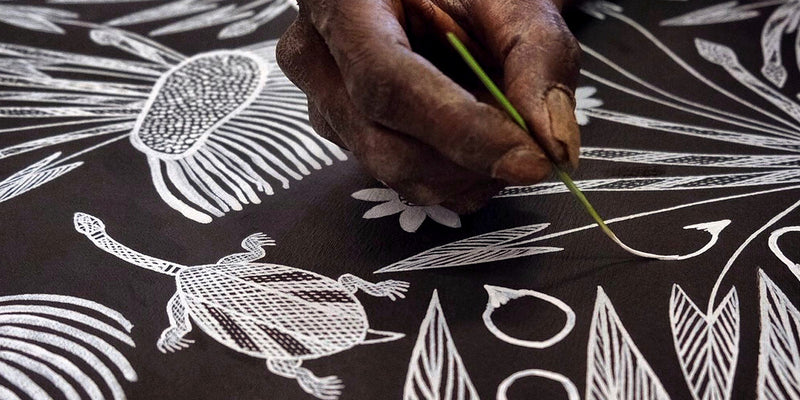
  • Aboriginal Artwork by Gladys Kuru Bidu, Linyji (Claypan), 91x61cm
  • Aboriginal Artwork by Gladys Kuru Bidu, Linyji (Claypan), 91x61cm
  • Aboriginal Artwork by Gladys Kuru Bidu, Linyji (Claypan), 91x61cm
  • Aboriginal Artwork by Gladys Kuru Bidu, Linyji (Claypan), 91x61cm

Gladys Kuru Bidu, Linyji (Claypan), 91x61cm

  • 120-day returns
  • Free insured post
  • Posts from Tasmania in 1 business day
  • Colour-accurate images
Martumili Artists Certificate of Authenticity

Community Certified Artwork

This original artwork is sold on behalf of Martumili Artists, a community-run art centre. It includes their Certificate of Authenticity.

  • Aboriginal Artists - Gladys Kuru Bidu
  • Community - 
  • Aboriginal Art Centre - Martumili Artists
  • Catalogue number - 24-798
  • Materials - Acrylic paint on linen
  • Size(cm) - H91 W61 D2
  • Postage variants - Artwork posted un-stretched and rolled for safe shipping
  • Orientation - Painted from all sides and OK to hang as wished

"This linyji (claypan) story, it's about when the old people used to be living in the desert, a long, long time ago, thousands of years ago. They used to make a hole in the linyji for the wilyki (seed), using the wind to separate the seed [from the husk; winnowing]. Also, when we used to be sick, old people used to wet the parna (sand/soil/earth) with the kapi (water), [then] mix it and use on burns. For headaches, they put it on the kata (head). Like a Band-Aid, or Panadol, pujiman (traditional, desert dwelling) way!" - Kuru Gladys Bidu

This work depicts a linyji (claypan) within the artists’ ngurra (home Country, camp), typically represented with circular forms. Claypans were visited more often during the wet seasons as they filled with water. As Kuru here describes, besides being a valuable water source, claypans were also ingeniously utilized for the removal of husks from seeds before consumption. Additionally, the clay itself was applied topically for its healing properties, aiding in the treatment of burns and soothing headaches.

During the pujiman (traditional, desert dwelling) period, knowledge of water sources was critical for survival, and today Martu Country is still defined in terms of the location and type of water. Each of the hundreds of claypans, rockholes, waterholes, soaks and springs found in the Martu desert homelands is known through real life experience and the recounting of Jukurrpa (Dreaming) narratives by name, location, quality and seasonal availability. This encyclopedic knowledge extends even to the nature and movement of arterial waterways, and sustained Martu as they travelled across their Country, hunting and gathering, visiting family, and fulfilling ceremonial obligations. They would traverse very large distances annually, visiting specific areas in the dry and wet season depending on the availability of water and the corresponding cycles of plant and animal life on which hunting and gathering bush tucker was reliant.

“Wantili is my place, where I was born. It’s a place where everyone was living, it’s all of their ngurra (home). It’s the Jukurrpa (Dreaming) of that place. All those claypans, a place where everyone comes together for ceremony and gatherings, all meeting with different families. I went there with my aunt [Jakayu Biljabu] (dec.) and my sister [Kumpaya Girgirba], they told me the story of where I was born, in pujiman (traditional, desert dwelling) times. We walked all over the place, I was just a little one.”
– Gladys Bidu Kuru

Gladys is a Karimarra woman. She was born near Wantili and speaks Manjilyajarra. Gladys and her family were picked up when she was a baby in Yulpul and taken first to Parngurr, then to Jigalong Mission, where she attended the mission school. From there she travelled with her family to Strelley Station, and then to Camp 61, an outstation on Bilanooka Station. “We stayed there with the old people, so many old people they set up a Martu school there” she says. “Then we heard Martu were going back to their homeland, their ngurra, so then we came to Punmu with those old people, Mr Lane and the other old people.” Settling in Punmu during the Return to Country movement of the early 1980s, Gladys assisted with the establishment of the Punmu School in the community’s bough shelter when she was looking after her sister’s children.

Today Gladys is an accomplished teacher and respected cultural advisor for Martumili and the Kanyirninpa Jukurrpa Martu ranger program. She also works with Punmu School as a senior cultural and linguistics adviser and board member. “I speak on behalf of Martu as a board member of the school and KJ and with Martumili. I am a cultural adviser and language adviser supporting people with interpreting, recording, going out bush and going to conferences for language. The school has two way learning: Martu way and English. Helping people to be strong in both ways. It’s a lot of travel, many, many places.”

Gladys was taught to paint in Jigalong by her aunt, renowned senior artist Jakayu Biljabu (dec.), and the two would regularly paint together. Gladys paints her ngurra (home Country, camp); Wantili, a large round jurnu (soak) and linyji (claypan) near Well 25 on the Canning Stock Route. The area is dominated by claypans surrounded by tuwa (sandhills). Nyilangkurr, a prominent yapu (hill) is located on the edge of the claypan. Following rains the typically dry claypans are filled with water, with the overflow from nearby waterholes flowing to Wantili. At that time, Wantili becomes an important place for obtaining fresh water for drinking and bathing. Wantili is significant for the fact that at this site Kartujarra, Manyjilyjarra, Putijarra and Warnman people would all come together for ceremonies during the pujiman (traditional, desert dwelling) era. Many jiwa (stones used by women for grinding seeds) from these times can still be found there today.

Martumili Artists was established in late 2006 and supports Martu artists in Kunawarritji, Punmu, Parnngurr, Jigalong, Warralong, Irrungadji (Nullagine), and Parnpajinya (Newman). Many Martu artists have close relationships with established artists amongst Yulparija, Kukatja, and other Western Desert peoples and are now gaining recognition in their own right for their diverse, energetic, and unmediated painting styles. Their works reflect the dramatic geography and scale of their homelands in the Great Sandy Desert and Rudall River regions of Western Australia. Martumili Artists represents speakers of Manyjilyjarra, Warnman, Kartujarra, Putijarra, and Martu Wangka languages, many of whom experienced first contact with Europeans in the 1960s. The artists include painters working in acrylics and oils, as well as weavers coiling baskets and sculptors working in wood, grass, and wool. Martu artists proudly maintain their creative practices whilst pursuing social and cultural obligations across the Martu.

Martu Art from the Western Desert

Martu Art from the Western Desert

This artwork comes from Martumili Artists, based in Newman in Western Australia and representing Martu artists living across remote desert communities. Martu Country covers more than 150,000 square kilometres of the Western Desert, including the Great Sandy, Little Sandy and Gibson Deserts, an expansive landscape punctuated by salt lakes and claypans.

— Image: Punu community on Nyayartakujarra (Lake Dora), Great Sandy Desert

"Guy was incredibly helpful when we were selecting the artwork for my mum's birthday present. He was happy to let us into the Launceston office and sort through artworks to find 'the one'. The artwork is stunning and Guy was able to explain about the artist and significance of the piece." - Simon, Aus

– Read all 1,680+ ART ARK Customer Reviews

← Previous Page Arnhem Land Weaving Arnhem Land Art Dot Paintings Subscribers Stretched Paintings Desert Weavings Landscape Paintings


Remote Aboriginal artists share their culture through art

Supporting Aboriginal Artists

By sharing their culture, remote artists create opportunities for themselves. Buying Aboriginal art ethically supports these artists while bringing warmth and meaning into your home.


Aboriginal artwork displayed in a home

Original Art That Will Look Great at Your Place

Beautiful, original art that fits perfectly into your home. Your purchase supports Aboriginal artists and helps us continue our mission in celebrating and promoting ethical Aboriginal art.

We're confident you will love your artwork, but if it’s not right for any reason, return it within 120 days. Easy. Over 1,680 past customers have shared their experiences, and they love their artworks.

Reserving a Work

You're welcome to secure a work with a 20% deposit. Use code DEPOSIT20 at checkout and settle the balance within 30 days (we'll email you an invoice).

Deposits are non-refundable, but once paid in full your artwork ships as normal, covered by our 120-day returns.


Aboriginal painting in situ with the certificate of authenticity shown

Authenticity Certified by Community Art Centres

Only certificates from community-based Aboriginal art centres guarantee ethical sourcing, ensuring your purchase supports the artist and their community. Every ART ARK® piece includes this documentation, offering transparency and trust in its origin. Proof of provenance ensures authenticity and contributes to the artwork’s long-term value.

Learn more about Aboriginal Art Authenticity.


Aboriginal artwork being photographed and colour corrected

Colour Accuracy Guaranteed

We spend hours to ensure your artwork will arrive as shown. Carefully packed, colour-accurate, and ready to love.

Colours are matched as closely as possible, and with returns under 0.2%, our customers are consistently delighted with their artworks.


Example of an Aboriginal painting framed in a float frame

Framing Aboriginal Art

We keep pricing transparent by delivering artworks without added third-party costs, allowing us to offer free shipping and maintain pricing in accordance with each art centre. Canvas and linen pieces are sent rolled for safe delivery and easy re-stretching at your local framer.

Learn more about Framing Aboriginal Art.


Worldwide shipping from ART ARK

Fast, Free Post

From Tasmania to your doorstep, no matter where you are in the world. Orders ship within 1 business day and arrive in 1 to 3 days within Australia and 5 to 10 days internationally. Enjoy free domestic shipping on all orders. International shipping is free for orders over A$500, and a flat rate of A$30 applies for orders under that amount.

Customs & Duties: Original artworks (tariff codes 9701.91 for paintings and drawings, 9703.00 for sculptures) are duty and tax-free when arriving in the United States and Canada. The UK applies a reduced VAT of 5%, France 5.5%, and Germany 7%. Other countries may have different rates, so we recommend checking before purchase.

*Estimated delivery for international shipments is 5–10 business days, not including any customs processing time, which varies by country.

Learn more about Customs and Shipping.


arty emails? (they're good)