Life is better with art!
  • Aboriginal Artwork by Lee Nangala Gallagher, Yankirri Jukurrpa (Emu Dreaming) - Ngarlikurlangu, 107x91cm
  • Aboriginal Artwork by Lee Nangala Gallagher, Yankirri Jukurrpa (Emu Dreaming) - Ngarlikurlangu, 107x91cm
  • Aboriginal Artwork by Lee Nangala Gallagher, Yankirri Jukurrpa (Emu Dreaming) - Ngarlikurlangu, 107x91cm
  • Aboriginal Artwork by Lee Nangala Gallagher, Yankirri Jukurrpa (Emu Dreaming) - Ngarlikurlangu, 107x91cm
  • Aboriginal Artwork by Lee Nangala Gallagher, Yankirri Jukurrpa (Emu Dreaming) - Ngarlikurlangu, 107x91cm

Lee Nangala Gallagher, Yankirri Jukurrpa (Emu Dreaming) - Ngarlikurlangu, 107x91cm

This Dreaming tells the story of a ‘yankirri’ (emu) and a ‘wardilyka’ (bush turkey)..
  • 120-day returns
  • Free insured post
  • Posts from Tasmania in 1 business day
  • Colour-accurate images
Warlukurlangu Artists Certificate of Authenticity

Community Certified Artwork

This original artwork is sold on behalf of Warlukurlangu Artists, a community-run art centre. It includes their Certificate of Authenticity.

  • Aboriginal Artist - Lee Nangala Gallagher
  • Community - Nyirripi
  • Aboriginal Art Centre - Warlukurlangu Artists Aboriginal Corporation
  • Catalogue number - 1060/25ny
  • Materials - Acrylic paint on linen 
  • Size(cm) - H107 W91 D2
  • Postage variants - Artwork is posted un-stretched and rolled for safe shipping
  • Orientation - Painted from all sides and OK to hang as wished

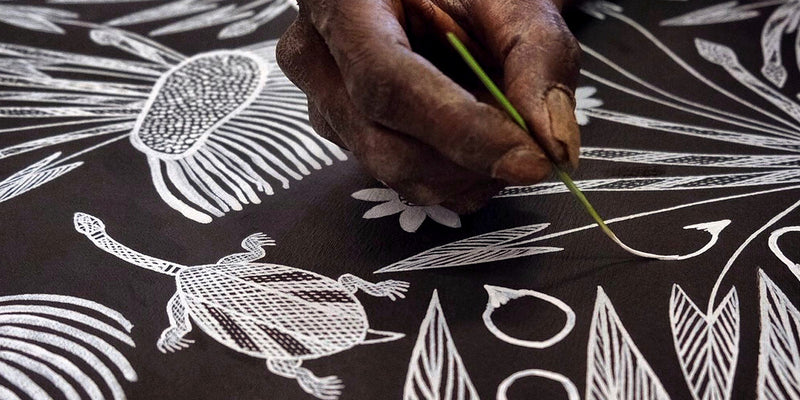
This painting depicts a ‘yankirri Jukurrpa’ (emu [Dromaius novaehollandiae] Dreaming) from a place called Ngarlikurlangu, approximately 50kms north of Yuendumu. The ‘kirda’ (owners) of this Dreaming are Nangala/Nampijinpa women and Jangala/Jampijinpa men. 

This Jukurrpa tells the story of a ‘yankirri’ (emu) and a ‘wardilyka’ (bush turkey [Ardeotis australis]). ‘Yankirri’ lived at a soakage to the west called Warnirripanu (or Walangkamirirri), while ‘wardilyka’ lived at a soakage to the east called Parirri.  The emu and bush turkey used to go around the country picking ‘yakajirri’ (bush raisins [Solanum centrale]) and mashing them into ‘kapurdu’ (fruit balls) to save in their nests for later. However, they were jealous of each other; the emu thought that the bush turkey was picking the best and juiciest ‘yakajirri’, and was leaving him with only the sour ‘yakajirri’.

The emu went to the bush turkey’s nest to the east while the bush turkey was out hunting and smashed up the ‘kapurdu’ that the bush turkey had saved there. When the bush turkey returned, he found his smashed ‘yakajirri’ balls and realized that the emu had destroyed them. He went to the west to confront the emu and when he found him, they got into a big fight. The bush turkey eventually flew away to the north, leaving behind the smashed ‘yakajirri’ balls.

This practice of making ‘kapurdu’ (fruit balls) is a traditional Warlpiri method of storing ‘yakajirri’; in the old days, people used to dry the ‘yakajirri’, grind them up with a rock in a coolamon, mix them with water and form balls from them, and cover the ‘kapurdu’ with red ochre so they would keep.

Today at Ngarlikirlangu we can see round, red rocks which are the ‘kapurdu’ that the emu smashed up. There is also a dance for this ‘yankirri’ (emu) Jukurrpa that is performed during mens’ initiation ceremonies. A number of other Jukurrpa are also located at Ngarlikirlangu, including ‘wardilyka Jukurrpa’ (bush turkey Dreaming), ‘yardijiinypa Jukurrpa’ (meat ant Dreaming), and ‘pirntina Jukurrpa’ (woma or Ramsay’s python [Aspidites ramsayi] Dreaming). Lots of ‘yakajirri’ grow around the Ngarlikirlangu area today.

In contemporary Warlpiri paintings, traditional iconography can be used to represent the Jukurrpa, associated sites, and other elements. ‘Yankirri’ are usually represented by arrow-like shapes depicting their ‘wirliya’ (footprints) as they walk around.

”I find painting very contemplative.” Lee Nangala Wayne/Gallagher was born in 1958 in Yuendumu, a remote Aboriginal community 290 km north-west of Alice Springs in the NT of Australia. She lived most of her life in Yuendumu, but when her husband passed away in 2003 she moved to Nyirripi, a further 160 km west of Yuendumu, where her mother still lives. Nyirripi is her father’s country and her mother is Mary Napangardi Gallagher, a well-known artist who also paints with Warlukurlangu Artists. Lee has one sister and three brothers. She has three children, two sons and one daughter and one adopted child from her younger sister. She has lots of grandkids. Lee went to Yuendumu School and after completing school she worked for the Central Desert Shire (CDS) Council Trust, cooking for the aged care. She has been painting with Warlukurlangu Artists Aboriginal Corporation, an Aboriginal owned and governed art centre in Yuendumu since 2006. She began painting after “watching all those old people doing painting”. She says she feels better when she’s painting. Lee paints her father’s Jukurrpa stories, Dreamings that relate directly to her father’s land, its features and the plants and animals that inhabit it. These stories have been passed down for millennia. She particularly likes painting her father’s Jukurrpa, especially Yankirri Jukurrpa (Emu Dreaming) and Yunkaranyi Jukurrpa (Flying Ants), Dreamings that relate to her country between Nyirripi and Yuendumu. Lee uses traditional Aboriginal colours of black, yellow and red, acrylic colours that imitate the ochres found in the area.


Warlpiri Art from the Tanami Desert

Warlpiri Art from the Tanami Desert

This artwork comes from Warlukurlangu Artists in Yuendumu. The art centre represents Warlpiri artists from Yuendumu and Nyirripi, located in the Tanami Desert northwest of Alice Springs. This remote region of red sand and open desert Country is central to the stories and knowledge shared through the paintings.

— Image: Nyirripi community in the Northern Territory of Australia

"I had great communication and very clear explanations from Guy. My order arrived in France in impeccable packaging. I will definitely order from Art Ark again." - Thierry, FR

– Read all 1,680+ ART ARK Customer Reviews

← Previous Page Arnhem Land Weaving Arnhem Land Art Dot Paintings Subscribers Stretched Paintings Desert Weavings Landscape Paintings


Remote Aboriginal artists share their culture through art

Supporting Aboriginal Artists

By sharing their culture, remote artists create opportunities for themselves. Buying Aboriginal art ethically supports these artists while bringing warmth and meaning into your home.


Aboriginal artwork displayed in a home

Original Art That Will Look Great at Your Place

Beautiful, original art that fits perfectly into your home. Your purchase supports Aboriginal artists and helps us continue our mission in celebrating and promoting ethical Aboriginal art.

We're confident you will love your artwork, but if it’s not right for any reason, return it within 120 days. Easy. Over 1,680 past customers have shared their experiences, and they love their artworks.

Reserving a Work

You're welcome to secure a work with a 20% deposit. Use code DEPOSIT20 at checkout and settle the balance within 30 days (we'll email you an invoice).

Deposits are non-refundable, but once paid in full your artwork ships as normal, covered by our 120-day returns.


Aboriginal painting in situ with the certificate of authenticity shown

Authenticity Certified by Community Art Centres

Only certificates from community-based Aboriginal art centres guarantee ethical sourcing, ensuring your purchase supports the artist and their community. Every ART ARK® piece includes this documentation, offering transparency and trust in its origin. Proof of provenance ensures authenticity and contributes to the artwork’s long-term value.

Learn more about Aboriginal Art Authenticity.


Aboriginal artwork being photographed and colour corrected

Colour Accuracy Guaranteed

We spend hours to ensure your artwork will arrive as shown. Carefully packed, colour-accurate, and ready to love.

Colours are matched as closely as possible, and with returns under 0.2%, our customers are consistently delighted with their artworks.


Example of an Aboriginal painting framed in a float frame

Framing Aboriginal Art

We keep pricing transparent by delivering artworks without added third-party costs, allowing us to offer free shipping and maintain pricing in accordance with each art centre. Canvas and linen pieces are sent rolled for safe delivery and easy re-stretching at your local framer.

Learn more about Framing Aboriginal Art.


Worldwide shipping from ART ARK

Fast, Free Post

From Tasmania to your doorstep, no matter where you are in the world. Orders ship within 1 business day and arrive in 1 to 3 days within Australia and 5 to 10 days internationally. Enjoy free domestic shipping on all orders. International shipping is free for orders over A$500, and a flat rate of A$30 applies for orders under that amount.

Customs & Duties: Original artworks (tariff codes 9701.91 for paintings and drawings, 9703.00 for sculptures) are duty and tax-free when arriving in the United States and Canada. The UK applies a reduced VAT of 5%, France 5.5%, and Germany 7%. Other countries may have different rates, so we recommend checking before purchase.

*Estimated delivery for international shipments is 5–10 business days, not including any customs processing time, which varies by country.

Learn more about Customs and Shipping.


arty emails? (they're good)