Life is better with art!
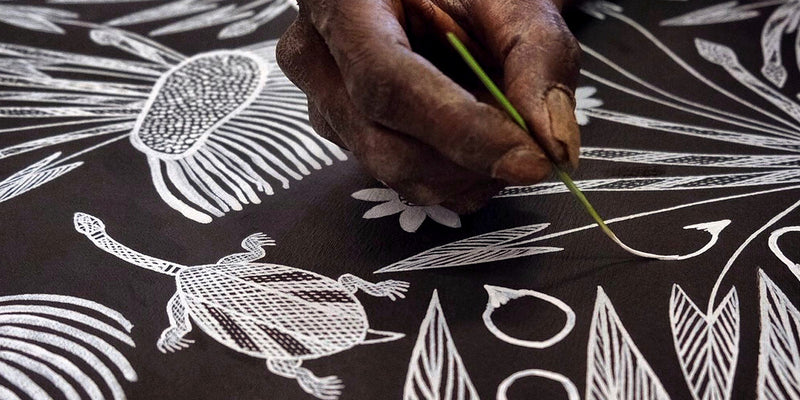
  • Aboriginal Artwork by Marianne Burton, Punmu Waterholes, 76x46cm
  • Aboriginal Artwork by Marianne Burton, Punmu Waterholes, 76x46cm
  • Aboriginal Artwork by Marianne Burton, Punmu Waterholes, 76x46cm
  • Aboriginal Artwork by Marianne Burton, Punmu Waterholes, 76x46cm

Marianne Burton, Punmu Waterholes, 76x46cm

Martumili Artists Certificate of Authenticity

Community Certified Artwork

This original artwork is sold on behalf of Martumili Artists, a community-run art centre. It includes their Certificate of Authenticity.

  • Aboriginal Artists - Marianne Burton
  • Community - Newman
  • Aboriginal Art Centre - Martumili Artists
  • Catalogue number - 25-224
  • Materials - Acrylic paint on linen
  • Size(cm) - H76 W46 D2
  • Postage variants - Artwork posted un-stretched and rolled for safe shipping
  • Orientation - Painted from all sides and OK to hang as wished

“Punmu, I went there when I was a young girl, a teenager with my mother and father before my mother passed. Big mob of people was there. No building, just little cubby houses [bough shelters]. Long time I been there.
These here are the waterholes around Punmu; Rawa spring – Rawa means ‘long time’, Tuu-tuu, Jila-jila, Wirlarra and Yilyara. That is my ngurra (home Country, camp). We grew up in Punmu around all these water holes. I still live here with my grandkids, [we share the] same stories for all these places.”
– Marianne Burton

Punmu refers to a region and an Aboriginal community within its vicinity, located 670km north-east of Newman. Created during the return to Country movement of the 1980s, with the recognition of Martu land rights and native title, the community was named after a nearby Jukurrpa (Dreaming) story. As described by Marianne, Punmu is her ngurra; she grew up in this region with her parents.

Punmu community sits on the edge of a large salt lake known as Nyayartakujarra, or Lake Dora. The lake runs south into Karlamilyi River (Rudall River). Surrounding Punmu are numerous fresh water soaks and the red tali (sandhills) typical of the area. The most frequently visited yinta (permanent springs) around Punmu include Wirlarra, Rawa, Yilyara, Jila-jila and Tuu-tuu.

The Country around Punmu features in several Jukurrpa stories. Of particular importance is the story of the Jila Kujarra (Two Snakes), one of the key Jukurrpa narratives for the Martu. Though the story belongs to Warnman people, it is shared across the Western Desert with several other language groups. The narrative centres on the travels of two snakes as they are pursued by the Niminjarra, spiritual ancestors of the Warnman people.

Before transforming themselves into snakes, the Jila Kujarra were young brothers. As snakes, they began travelling home to their mother, but were intercepted by the Niminjarra, who tracked the Jila Kujarra to Paji, east of Nyayartakujarra (Lake Dora). Though the Jila Kujarra eluded their pursuers here by escaping under the lake at Paji, they were soon after speared and injured by two Pukur (initiates with bundled hair) at Nyayartakujarra, who returned with the Niminjarra to cook the snakes at the site of Kumpupirnly (Kumpupinly, Lake Disappointment).

As the Niminjarra cut down the length of the Jila Kujarra, the snakes’ bladders were pierced, causing an explosion of scalding hot urine in which the Niminjarra all perished and became black rocks at the site. The spirits of the Jila Kujarra returned to their mother at Nyayartakujarra, where the mother and her sons entered the ground below Nyayartakujarra and remain to this day.

“I was born in Jigalong, long me [ago in] Jigalong. The old people all got picked up and brought into Jigalong. Them old people all wanted to go back to the desert. We moved to Camp 61 [Ngalkuninya] for a little while and then we all moved this way to Punmu. I was young, thirteen or something when I came to Punmu.

I like to paint around Punmu rockholes, springs. In the morning, sunset colours, that’s what I’m thinking about. In the plane looking down, I want to do a painting what I’m looking at, it looks nice. I want to do more painting like that. I like painting, it makes me feel good.

I’ve been in Jigalong with my father, learning to paint. I was watching him paint. I stayed with them all day, sometimes I help[ed] him and he told stories. Doing the dot paint, that’s when I learn[ed] on a little canvas.” - Marianne Burton

Marianne was born in Jigalong, moving briefly to Camp 61, an outstation on Bilanooka Station as a child, before settling in Punmu Community, where she still resides. Her father was senior Martu artist Pukina Burton. Marianne and her father used to sit down together, painting while Pukina told stories about his Country. One day Marianne would like to teach her children and grandchildren the same stories. “Me and [my granddaughter] Azaniah like painting together, sometimes she helps me too. Sometimes my grandson Jake too, he did a couple. I like having my family around to paint.”

Martumili Artists was established in late 2006 and supports Martu artists in Kunawarritji, Punmu, Parnngurr, Jigalong, Warralong, Irrungadji (Nullagine), and Parnpajinya (Newman). Many Martu artists have close relationships with established artists amongst Yulparija, Kukatja, and other Western Desert peoples and are now gaining recognition in their own right for their diverse, energetic, and unmediated painting styles. Their works reflect the dramatic geography and scale of their homelands in the Great Sandy Desert and Rudall River regions of Western Australia. Martumili Artists represents speakers of Manyjilyjarra, Warnman, Kartujarra, Putijarra, and Martu Wangka languages, many of whom experienced first contact with Europeans in the 1960s. The artists include painters working in acrylics and oils, as well as weavers coiling baskets and sculptors working in wood, grass, and wool. Martu artists proudly maintain their creative practices whilst pursuing social and cultural obligations across the Martu.

Martu Art from the Western Desert

Martu Art from the Western Desert

This artwork comes from Martumili Artists, based in Newman in Western Australia and representing Martu artists living across remote desert communities. Martu Country covers more than 150,000 square kilometres of the Western Desert, including the Great Sandy, Little Sandy and Gibson Deserts, an expansive landscape punctuated by salt lakes and claypans.

— Image: Punu community on Nyayartakujarra (Lake Dora), Great Sandy Desert

"The art is beautiful and has brightened our home." - Barbara, Aus – ART ARK Customer Review


← Previous Page Arnhem Land Weaving Arnhem Land Art Dot Paintings Subscribers Stretched Paintings Desert Weavings Landscape Paintings


Remote Aboriginal artists share their culture through art

Supporting Aboriginal Artists

By sharing their culture, remote artists create opportunities for themselves. Buying Aboriginal art ethically supports these artists while bringing warmth and meaning into your home.


Aboriginal artwork displayed in a home

Original Art That Will Look Great at Your Place

Beautiful, original art that fits perfectly into your home. Your purchase supports Aboriginal artists and helps us continue our mission in celebrating and promoting ethical Aboriginal art.

We're confident you will love your artwork, but if it’s not right for any reason, return it within 120 days. Easy. Over 1,670 past customers have shared their experiences, and they love their artworks.

Reserving a Work

You're welcome to secure a work with a 20% deposit. Use code DEPOSIT20 at checkout and settle the balance within 30 days (we'll email you an invoice).

Deposits are non-refundable, but once paid in full your artwork ships as normal, covered by our 120-day returns.


Aboriginal painting in situ with the certificate of authenticity shown

Authenticity Certified by Community Art Centres

Only certificates from community-based Aboriginal art centres guarantee ethical sourcing, ensuring your purchase supports the artist and their community. Every ART ARK® piece includes this documentation, offering transparency and trust in its origin. Proof of provenance ensures authenticity and contributes to the artwork’s long-term value.

Learn more about Aboriginal Art Authenticity.


Aboriginal artwork being photographed and colour corrected

Colour Accuracy Guaranteed

We spend hours to ensure your artwork will arrive as shown. Carefully packed, colour-accurate, and ready to love.

Colours are matched as closely as possible, and with returns under 0.2%, our customers are consistently delighted with their artworks.


Example of an Aboriginal painting framed in a float frame

Framing Aboriginal Art

We keep pricing transparent by delivering artworks without added third-party costs, allowing us to offer free shipping and maintain pricing in accordance with each art centre. Canvas and linen pieces are sent rolled for safe delivery and easy re-stretching at your local framer.

Learn more about Framing Aboriginal Art.


Worldwide shipping from ART ARK

Fast, Free Post

From Tasmania to your doorstep, no matter where you are in the world. Orders ship within 1 business day and arrive in 1 to 3 days within Australia and 5 to 10 days internationally. Enjoy free domestic shipping on all orders. International shipping is free for orders over A$500, and a flat rate of A$30 applies for orders under that amount.

Customs & Duties: Original artworks (tariff codes 9701.91 for paintings and drawings, 9703.00 for sculptures) are duty and tax-free when arriving in the United States and Canada. The UK applies a reduced VAT of 5%, France 5.5%, and Germany 7%. Other countries may have different rates, so we recommend checking before purchase.

*Estimated delivery for international shipments is 5–10 business days, not including any customs processing time, which varies by country.

Learn more about Customs and Shipping.


arty emails? (they're good)