Einkaufswagen
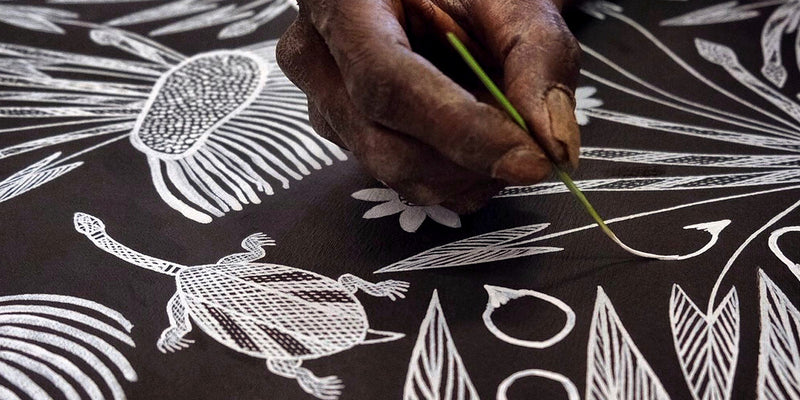
  • Michelle Inkamala, Ili (Desert fig tree), 60x50cm
  • Michelle Inkamala, Ili (Desert fig tree), 60x50cm
  • Michelle Inkamala, Ili (Desert fig tree), 60x50cm
  • Michelle Inkamala, Ili (Desert fig tree), 60x50cm
Michelle Inkamala, Ili (Desert fig tree), 60x50cm

Michelle Inkamala, Ili (Desert fig tree), 60x50cm

The desert fig is used by Anangu for bush food.

Originales Kunstwerk, zertifiziert durch das gemeinschaftliche Kunstzentrum.

Kostenloser, versicherter Versand und 120 Tage Rückgaberecht
Versand aus Australien innerhalb von 1 Werktag
Schnelle weltweite Lieferung*
Garantierte Farbgenauigkeit
Iwiri Arts – Echtheitszertifikat

Gemeinschaftlich zertifiziertes Kunstwerk

Dieses originale Kunstwerk wird im Namen von Iwiri Arts, einem gemeinschaftlich geführten Kunstzentrum, verkauft. Es enthält ein Echtheitszertifikat.

  • Aboriginal Artist - Michelle Inkamala
  • Community - Ernabella/Adelaide
  • Aboriginal Art Centre - Iwiri Arts 
  • Catalogue number - 26-161
  • Materials - Professional artist acrylic on canvas
  • Size(cm) - H60 W50 D2
  • Postage variants - Artwork posted un-stretched and rolled for safe shipping
  • Orientation - Painted from all sides and OK to hang as wished

Michelle depicts the landscape at Ernabella. She paints the ili tree, the desert fig, which is used by Anangu for bush food.

Associated excerpt, Macquarie University

Desert Figs are of great importance to First Nations people of Central Australia, as a traditional source of food, for shelter, and for spirituality. Nutritionally, they are rich in calcium and potassium. Even the dry fruit fallen to the ground was ground with water to form hard balls that could be redried and stored for later use.

Historically, Indigenous people are known to have transplanted the figs and moved them to distant waterholes to provide future food resources. In part, the present distribution of the species is considered likely to have been due to human dispersal. Even in current times, cuttings and seedlings are transplanted by communities to provide food reserves.

The fig features in oral histories and is of such significance to the Pitjantjatjara people of Central Australia that historically, damaging a tree could be punishable by death.


Details are currently unavailable

Iwiṟi was established by Aṉangu in 2018, many of whom had been forced to move to Adelaide due to chronic health conditions and lack of services in their home communities. Living far from their traditional homelands, Anangu were concerned about the cultural and social isolation they were experiencing and saw a need to act.  Iwiri was formed initially to help retain, promote and transmit Anangu culture and language through the areas of arts, language, knowledge and community. Since then Iwiṟi has grown rapidly into an organization that delivers  a range of programs that aim to strengthen and advance Aṉangu wellbeing.

Iwiri strengthens the Aṉangu community through cultural and arts activities, creating employment opportunities and enterprise development. We want our young people to be strong in their language and culture and to take up opportunities to work in our community.

"Beautifully packed with certificate enclosed." - Olivia, Aus – ART ARK Customer Review

Aṉangu-Kunst aus Adelaide

Aṉangu-Kunst aus Adelaide

Dieses Kunstwerk stammt von Iwiṟi Arts, einer von Aṉangu geführten Organisation in Adelaide. Das Studio unterstützt Aṉangu, die aufgrund begrenzter Versorgung aus abgelegenen Gemeinden umziehen mussten, und hilft Künstlern aus den APY Lands, ihre Verbindung zu Country, Sprache und Tjukurpa zu bewahren, während sie fern der Homelands leben oder sich in der Stadt aufhalten.

— Bild: Straße nach Pukatja, Südaustralien


← Vorherige Seite Arnhem Land Webereien Kunst aus dem Arnhemland Punktmalereien Abonnenten Aufgespannte Gemälde Wüstenwebereien Landschaftsmalereien