Panier
  • Aboriginal Artwork by Michael Japaljarri Wayne, Yankirri Jukurrpa (Emu Dreaming) - Ngarlikurlangu, 122x91cm
  • Aboriginal Artwork by Michael Japaljarri Wayne, Yankirri Jukurrpa (Emu Dreaming) - Ngarlikurlangu, 122x91cm
  • Aboriginal Artwork by Michael Japaljarri Wayne, Yankirri Jukurrpa (Emu Dreaming) - Ngarlikurlangu, 122x91cm
  • Aboriginal Artwork by Michael Japaljarri Wayne, Yankirri Jukurrpa (Emu Dreaming) - Ngarlikurlangu, 122x91cm
  • Aboriginal Artwork by Michael Japaljarri Wayne, Yankirri Jukurrpa (Emu Dreaming) - Ngarlikurlangu, 122x91cm

Michael Japaljarri Wayne, Yankirri Jukurrpa (Emu Dreaming) - Ngarlikurlangu, 122x91cm

This Jukurrpa tells the story of a ‘yankirri’ (emu) and a ‘wardilyka’ (bush turkey)
  • Retours sous 120 jours
  • Envoi assuré gratuit
  • Expédié de Tasmanie sous 1 jour, transit 5 à 10 jours
  • TVA réduite à l'import sur l'art original
  • Images aux couleurs fidèles
Warlukurlangu Artists Certificate of Authenticity

Œuvre certifiée par la communauté

Cette œuvre originale est vendue au nom de Warlukurlangu Artists, un centre d’art communautaire. Elle comprend un certificat d’authenticité.

  • Aboriginal Artist - Michael Japaljarri Wayne
  • Community - Nyirripi
  • Aboriginal Art Centre - Warlukurlangu Artists Aboriginal Corporation
  • Catalogue number - 2344/26
  • Materials - Acrylic on linen
  • Size(cm) - H122 W91 D2
  • Postage variants - Artwork is posted un-stretched and rolled for safe shipping.
  • Orientation - Painted from all sides and OK to hang as wished

This painting depicts a ‘yankirri Jukurrpa’ (emu [Dromaius novaehollandiae] Dreaming) from a place called Ngarlikurlangu, approximately 50kms north of Yuendumu. The ‘kirda’ (owners) of this Dreaming are Nangala/Nampijinpa women and Jangala/Jampijinpa men. 

This Jukurrpa tells the story of a ‘yankirri’ (emu) and a ‘wardilyka’ (bush turkey [Ardeotis australis]). ‘Yankirri’ lived at a soakage to the west called Warnirripanu (or Walangkamirirri), while ‘wardilyka’ lived at a soakage to the east called Parirri.  The emu and bush turkey used to go around the country picking ‘yakajirri’ (bush raisins [Solanum centrale]) and mashing them into ‘kapurdu’ (fruit balls) to save in their nests for later. However, they were jealous of each other; the emu thought that the bush turkey was picking the best and juiciest ‘yakajirri’, and was leaving him with only the sour ‘yakajirri’.

The emu went to the bush turkey’s nest to the east while the bush turkey was out hunting and smashed up the ‘kapurdu’ that the bush turkey had saved there. When the bush turkey returned, he found his smashed ‘yakajirri’ balls and realized that the emu had destroyed them. He went to the west to confront the emu and when he found him, they got into a big fight. The bush turkey eventually flew away to the north, leaving behind the smashed ‘yakajirri’ balls.

This practice of making ‘kapurdu’ (fruit balls) is a traditional Warlpiri method of storing ‘yakajirri’; in the old days, people used to dry the ‘yakajirri’, grind them up with a rock in a coolamon, mix them with water and form balls from them, and cover the ‘kapurdu’ with red ochre so they would keep.

Today at Ngarlikirlangu we can see round, red rocks which are the ‘kapurdu’ that the emu smashed up. There is also a dance for this ‘yankirri’ (emu) Jukurrpa that is performed during mens’ initiation ceremonies. A number of other Jukurrpa are also located at Ngarlikirlangu, including ‘wardilyka Jukurrpa’ (bush turkey Dreaming), ‘yardijiinypa Jukurrpa’ (meat ant Dreaming), and ‘pirntina Jukurrpa’ (woma or Ramsay’s python [Aspidites ramsayi] Dreaming). Lots of ‘yakajirri’ grow around the Ngarlikirlangu area today.

In contemporary Warlpiri paintings, traditional iconography can be used to represent the Jukurrpa, associated sites, and other elements. ‘Yankirri’ are usually represented by arrow-like shapes depicting their ‘wirliya’ (footprints) as they walk around.

Michael Japaljarri Wayne was born in 1985 in the Alice Springs Hospital, the closest hospital to Yuendumu, a remote Aboriginal community located 290 km north-west from Alice Springs in the NT of Australia He is the son of Johnny Jungarrayi and Lee Nangala Gallagher-Wayne and the grandson of Mary Napangardi Gallagher, all successful artists working with Warlukurlangu Artists. He watched his parents and grandparents paint their Jukurrpa and listened to their stories. He is married to Ritasha Nampijinpa Martin and has one son, Johnny. He has lived in the Aboriginal Community of Yuendumu his whole life. He attended the local high school where he finished Year 8 in 2001. When he finished school he worked for the Community Development Employment Project (CDPE) and also worked on the Mt Theo Program, a successful program started by Yuendumu Community to address chronic petrol sniffing in Yuendumu. Michael has been painting with Warlukurlangu Artists Aboriginal Corporation, an Aboriginal owned and governed art centre located in Yuendumu, since 2003. He paints his father’s Jukurrpa stories, Dreamings which related directly to his land, its features and the plants and animals that inhabit it. These stories were passed down to him by his father and his father’s father before him for millennia. When he is not painting or working he enjoys playing football with the local Yuendumu team and hunting for goanna and kangaroo.

Art warlpiri du désert de Tanami

Art warlpiri du désert de Tanami

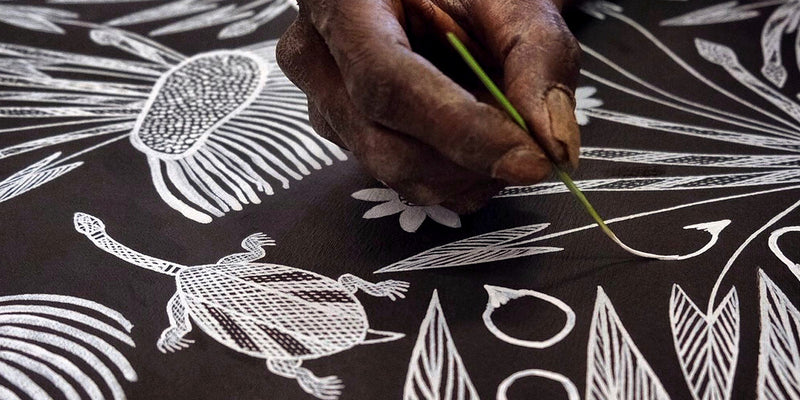
Cette œuvre provient de Warlukurlangu Artists à Yuendumu. Le centre d’art représente des artistes warlpiri de Yuendumu et Nyirripi, situés dans le désert de Tanami au nord-ouest d’Alice Springs. Cette région isolée de sable rouge et de vastes paysages désertiques est au cœur des récits et des savoirs transmis à travers les peintures.

— Image : communauté de Nyirripi, Territoire du Nord

"The personal story that came with the piece means I can pass this knowledge onto visitors who ask about the work. It really stands out on a white wall and makes me happy each time I look at it." - Rachel, Aus

– Read all 1,680+ ART ARK Customer Reviews

← Page précédente Peintures à points Tissage de la Terre d'Arnhem Art de la Terre d'Arnhem Peintures de paysages Cadeaux Abonnés


Remote Aboriginal artists share their culture through art

Soutenir les artistes aborigènes

En partageant leur culture, les artistes des régions éloignées se créent des opportunités. Acheter de l'art aborigène de manière éthique soutient ces artistes tout en apportant de la chaleur et du sens à votre intérieur.


Aboriginal artwork displayed in a home

Des œuvres d'art originales qui embelliront votre intérieur

De belles œuvres d'art originales qui s'intégreront parfaitement dans votre intérieur. Votre achat soutient les artistes aborigènes et nous aide à poursuivre notre mission de célébration et de promotion de l'art aborigène éthique.

Nous sommes convaincus que vous adorerez votre œuvre d'art, mais si pour une raison quelconque elle ne vous convient pas, vous pouvez la retourner dans les 120 jours. Facile. Plus de 1 680 clients précédents ont partagé leurs expériences, et ils adorent leurs œuvres d'art.

Réserver une œuvre

Vous pouvez sécuriser une œuvre avec un acompte de 20 %. Utilisez le code DEPOSIT20 lors du paiement et réglez le solde dans les 30 jours (nous vous enverrons une facture par e-mail).

Les acomptes ne sont pas remboursables, mais une fois le paiement intégral effectué, votre œuvre est expédiée normalement et couverte par notre politique de retour de 120 jours.


Aboriginal painting in situ with the certificate of authenticity shown

Authenticité certifiée par les Centres d'art communautaires

Seuls les certificats des centres d'art aborigènes communautaires garantissent un approvisionnement éthique, assurant que votre achat soutient l'artiste et sa communauté. Chaque œuvre ART ARK® inclut cette documentation, offrant transparence et confiance quant à son origine. La preuve de provenance assure l'authenticité et contribue à la valeur à long terme de l'œuvre.

En savoir plus sur l' Authenticité de l'Art Aborigène.


Aboriginal artwork being photographed and colour corrected

Fidélité des couleurs garantie

Nous passons des heures à nous assurer que votre œuvre d'art arrivera telle que présentée. Soigneusement emballée, aux couleurs fidèles et prête à être aimée.

Les couleurs sont ajustées le plus précisément possible, et avec un taux de retour inférieur à 0,2 %, nos clients sont toujours ravis de leurs œuvres.


Example of an Aboriginal painting framed in a float frame

Encadrement de l'art aborigène

Nous maintenons une tarification transparente en livrant les œuvres d'art sans coûts tiers supplémentaires, ce qui nous permet d'offrir la livraison gratuite et de maintenir les prix conformément à chaque centre d'art. Les toiles et les œuvres sur lin sont envoyées roulées pour une livraison sûre et une facilité de ré-encadrement chez votre encadreur local.

En savoir plus sur l'Encadrement de l'art aborigène.


Worldwide shipping from ART ARK

Livraison rapide et gratuite

De la Tasmanie à votre porte, où que vous soyez dans le monde. Les commandes sont expédiées sous 1 jour ouvrable et arrivent en 1 à 3 jours en Australie et en 5 à 10 jours à l'international. Profitez de la livraison domestique gratuite sur toutes les commandes. La livraison internationale est gratuite pour les commandes de plus de 500 $AU, et un tarif fixe de 30 $AU s'applique pour les commandes inférieures à ce montant.

Douanes et droits : Les œuvres d'art originales (codes tarifaires 9701.91 pour les peintures et dessins, 9703.00 pour les sculptures) sont exonérées de droits de douane et de taxes à l'arrivée aux États-Unis et au Canada. Le Royaume-Uni applique une TVA réduite de 5 %, la France 5,5 % et l'Allemagne 7 %. D'autres pays peuvent avoir des taux différents, nous vous recommandons donc de vérifier avant l'achat.

*Les délais de livraison estimés pour les expéditions internationales sont de 5 à 10 jours ouvrables, sans inclure le temps de traitement douanier, qui varie selon les pays.

En savoir plus sur les Douanes et la livraison.