Einkaufswagen
  • Tina Napangardi Martin, Jintiparnta Jukurrpa (Desert Truffle Dreaming) - Mina Mina, 107x46cm
  • Tina Napangardi Martin, Jintiparnta Jukurrpa (Desert Truffle Dreaming) - Mina Mina, 107x46cm
  • Tina Napangardi Martin, Jintiparnta Jukurrpa (Desert Truffle Dreaming) - Mina Mina, 107x46cm
  • Tina Napangardi Martin, Jintiparnta Jukurrpa (Desert Truffle Dreaming) - Mina Mina, 107x46cm

Tina Napangardi Martin, Jintiparnta Jukurrpa (Desert Truffle Dreaming) - Mina Mina, 107x46cm

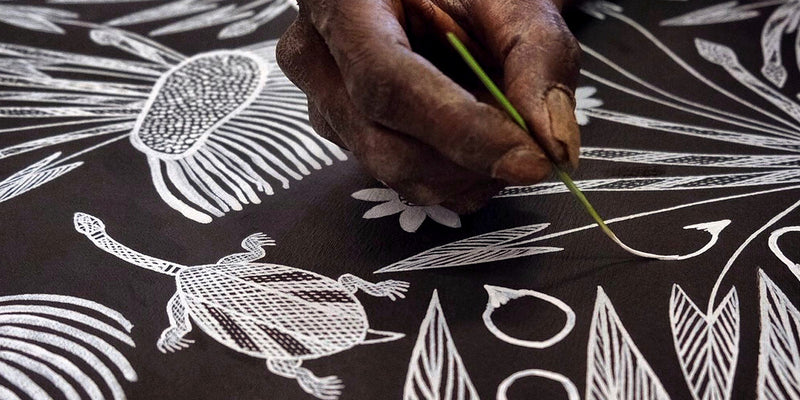
..circles and roundels represent the ‘jintiparnta’ (desert truffle) that the women collected as they travelled..
  • 120 Tage Rückgaberecht
  • Kostenloser versicherter Versand
  • Versand aus Tasmanien in 1 Werktag, Transit 5 bis 10 Tage
  • Ermäßigte Einfuhrumsatzsteuer auf Originalkunst
  • Farbtreue Bilder
Warlukurlangu Artists Certificate of Authenticity

Gemeinschaftlich zertifiziertes Kunstwerk

Dieses originale Kunstwerk wird im Namen von Warlukurlangu Artists, einem gemeinschaftlich geführten Kunstzentrum, verkauft. Es enthält ein Echtheitszertifikat.

  • Aboriginal Artist - Tina Napangardi Martin
  • Community - Nyirripi  
  • Aboriginal Art Centre - Warlukurlangu Artists Aboriginal Corporation  
  • Catalogue number - 2206/26
  • Materials - Professiona artist acrylic on Belgian Linen
  • Size(cm) - H107 W46 D2  
  • Postage variants - Artwork posted un-stretched and rolled for safe shipping
  • Orientation - Painted from all sides and OK to hang as wished

This ‘jintiparnta Jukurrpa’ (desert truffle [Elderia arenivaga] Dreaming) comes from Mina Mina. Mina Mina is an extremely important ceremonial site for Napangardi and Napanangka women that is located approximately 600kms west of Yuendumu, just east of Lake Mackay and the WA border. The area has a ‘marluri’ (salt lake or claypan) that is usually dry, without water. There are also a number of ‘mulju’ (soakages), sandhills, and a large stand of ‘kurrkara’ (desert oaks [Allocasuarina decaisneana]). The Mina Mina Jukurrpa is an important source of Warlpiri ritual knowledge and social organization, particularly relating to the different roles performed by men and women.

The ‘kirda’ (owners) of this Jukurrpa are Napangardi/Napanangka women and Japangardi/Japanangka men. There are a number of different Jukurrpa associated with Mina Mina; artists usually choose to depict one particular Jukurrpa in their paintings. In addition to ‘jintiparnta’ (desert truffle), these can include ‘karnta’ (women), ‘karlangu’ (digging sticks), ‘majardi’ (hairstring skirts/tassels), ‘ngalyipi’ (snakevine [Tinospora smilacina]), and ‘kurrkara’ (desert oak [Allocasuarina decaisneana]).

The Mina Mina Jukurrpa tells the story of a group of ancestral ‘karnta’ (women) who traveled from west to east. In the Dreamtime, these ancestral women danced at Mina Mina and ‘karlangu’ (digging sticks) rose up out of the ground. They collected these digging sticks and started travelling to the east. They carried their digging sticks over their shoulders and they were adorned with ‘majardi’ (hairstring belts), white feathers, and necklaces made from ‘yinirnti’ (bean tree [Erythrina vespertilio]) seeds. They continuously anointed themselves with ‘minyira’ (shiny fat) to increase their ritual powers as they went along. As the women travelled, they were followed by a ‘yinkardakurdaku’ (spotted nightjar [Eurostopodus argus]) from the Jakamarra subsection. The bird would call out and then hide in the bushes behind them as they travelled.

When the women danced at Mina Mina, they created a large dust cloud that swept up the ‘walyankarna’ (snake ancestors). The ‘walyankarna’ had previously transformed themselves from witchetty grubs into snakes at Kunajarrayi (Mount Nicker, 200km southwest of Yuendumu), and they had stopped at Mina Mina to watch the women dance. This dust cloud blew the ‘walyankarna’ further north to Yaturluyaturlu (near the Granites gold mine). In this way, the ‘karnta Jukurrpa’ (women’s Dreaming) and ‘ngarlkirdi Jukurrpa’ (witchetty grub Dreaming) intersect. This allowed the ancestral women to observe the witchetty grubs and learn how to best locate and cook them, which are skills that Warlpiri women still use today.

The women went east from Mina Mina, dancing, digging for bush tucker, and creating many places as they went. As they went east, they passed through Kimayi (a stand of ‘kurrkara’ (desert oak)). They passed through sandhill country where the ‘yarla’ (bush potato or ‘big yam’ [Ipomea costata]) ancestors from Yumurrpa and the ‘ngarlajiyi’ (pencil yam or ‘small yam’ [Vigna lanceolata]) ancestors from Yumurrpa were engaged in a huge battle over women. This battle is also a very important Warlpiri Jukurrpa narrative. The women went on to Janyinki and stopped at Wakakurrku (Mala Bore), where they stuck their digging sticks in the ground. These digging sticks turned into mulga trees, which still grow at Wakakurrku today. The women then went on to Lungkardajarra (Rich Bore), where they looked back towards their country in the west and started to feel homesick for what they’d left behind.

The women split up at Lungkardajarra. Some of them travelled eastwards to Yarungkanyi (Mount Doreen), and kept going east. They passed through Coniston in Anmatyerre country, and then went on to Alcoota and Aileron and beyond. The other group of women travelled travelled northwards from Lungkardajarra to Karntakurlangu. These women stopped at Karntakurlangu (an area that literally means ‘belonging to women’) to dig for ‘wardapi’ (sand monitor/goanna [Varanus gouldii]) and ‘jintiparnta’ (desert truffle). ‘Jintiparnta’ appears in the sandhills after the winter rains. The growing fungus forces the earth above it to crack, exposing it. Women dig it out of the ground and squeeze out the liquid inside to drink before cooking it in hot ashes.

After stopping to collect the ‘jintiparnta’ at Karntakurlangu, the women kept traveling further north. However, both groups of women eventually got so homesick for their desert oak country in the west that they went all the way back to Mina Mina, where they stayed for good.

The Mina Mina Jukurrpa (of which this ‘jintiparnta’ Jukurrpa is a part) contains important information about the different roles that men and women play in Warlpiri culture, particularly in the context of ritual performance. It alludes to an earlier time in which their ritual and social roles were reversed, in which women controlled the sacred objects and weapons that are now exclusively “owned” by men.

In contemporary Warlpiri paintings, traditional iconography can be used to represent the Jukurrpa, particular sites, and other elements. In paintings of the ‘jintiparnta’ Jukurrpa, circles and roundels represent the ‘jintiparnta’ (desert truffle) that the women collected as they travelled, and straight lines represent their ‘karlangu’ (digging sticks).

Tina Napangardi Martin Robertson was born in 1960 in Yuendumu, a remote Aboriginal community 290 km north-west of Alice Springs in the NT of Australia. Her parents and grandparents are deceased and she has only one sister who lives in Laramba community, near Napperby Station. Tina went to the local school in Yuendumu. She lived there for most of her life but now lives in Nyirripi after she married her second husband, Douglas Wilson. They have one son born in 1997. She also has five grown-up children from her first marriage. Tina has been painting with Warlukurlangu Artisits Aboriginal Corporation, an Aboriginal owned and governed art centre located in Yuendumu, since 1996. When Warlukurlangu Artists began exploring print making in 1997, Tina began screen printing and batik. However it wasn’t until 2007, when the children were grownup, that Tina found the time to paint on a regular basis. She paints her father’s Jukurrpa stories which include Yurrampi Jukurrpa (Honey Ant Dreaming) and Janyinki Jukurrpa (Yanyinki Dreaming). She also paints Ngalyipi Jukurrpa (Snake Vine Dreaming) and recently Pulundari Jukurrpa (Mushroom Dreaming). Tina enjoys painting, especially when her children and grandchildren are watching. She loves to explain to them the meaning of the different designs and patterns. She also enjoys going hunting on weekends for bush tomato and bush sultanas and when she can she visits her father’s country and her country.

Warlpiri-Kunst aus der Tanami-Wüste

Warlpiri-Kunst aus der Tanami-Wüste

Dieses Kunstwerk stammt von Warlukurlangu Artists in Yuendumu. Das Kunstzentrum vertritt Warlpiri-Künstler aus Yuendumu und Nyirripi in der Tanami-Wüste nordwestlich von Alice Springs. Diese abgelegene Region aus rotem Sand und offener Wüstenlandschaft ist zentral für die Geschichten und das Wissen, die in den Gemälden vermittelt werden.

— Bild: Nyirripi-Gemeinschaft, Northern Territory

"Beautifully presented and arrived quickly." - Tom, Aus – ART ARK Customer Review


← Vorherige Seite Arnhem Land Webereien Kunst aus Arnhem Land Punktmalereien Abonnenten Gerahmte Gemälde Wüstenwebereien Landschaftsgemälde


Remote Aboriginal artists share their culture through art

Unterstützung indigener Künstler

Indem sie ihre Kultur teilen, schaffen abgelegene Künstler Chancen für sich selbst. Der ethische Kauf von Kunst der Aborigines unterstützt diese Künstler und bringt gleichzeitig Wärme und Bedeutung in Ihr Zuhause.


Aboriginal artwork displayed in a home

Originalkunst, die bei Ihnen zu Hause großartig aussehen wird

Wunderschöne Originalkunst, die perfekt in Ihr Zuhause passt. Ihr Kauf unterstützt indigene Künstler und hilft uns, unsere Mission zur Feier und Förderung ethischer Kunst der Aborigines fortzusetzen.

Wir sind zuversichtlich, dass Sie Ihr Kunstwerk lieben werden, aber falls es aus irgendeinem Grund nicht passt, können Sie es innerhalb von 120 Tagen zurücksenden. Ganz einfach. Über 1.670 frühere Kunden haben ihre Erfahrungen geteilt, und sie lieben ihre Kunstwerke.

Reservierung eines Werkes

Gerne können Sie ein Werk mit einer Anzahlung von 20 % sichern. Verwenden Sie den Code DEPOSIT20 an der Kasse und begleichen Sie den Restbetrag innerhalb von 30 Tagen (wir senden Ihnen eine Rechnung per E-Mail).

Anzahlungen sind nicht erstattungsfähig, aber sobald der volle Betrag bezahlt wurde, wird Ihr Kunstwerk wie gewohnt versandt, abgedeckt durch unser 120-tägiges Rückgaberecht.


Aboriginal painting in situ with the certificate of authenticity shown

Authentizität zertifiziert durch Community Art Centres

Nur Zertifikate von gemeindebasierten Aboriginal Art Centres garantieren eine ethische Beschaffung und stellen sicher, dass Ihr Kauf den Künstler und seine Gemeinschaft unterstützt. Jedes ART ARK®-Stück enthält diese Dokumentation und bietet Transparenz und Vertrauen in seine Herkunft. Der Herkunftsnachweis sichert die Authentizität und trägt zum langfristigen Wert des Kunstwerks bei.

Erfahren Sie mehr über die Authentizität der Kunst der Aborigines.


Aboriginal artwork being photographed and colour corrected

Farbgenauigkeit garantiert

Wir investieren Stunden, um sicherzustellen, dass Ihr Kunstwerk wie abgebildet ankommt. Sorgfältig verpackt, farbgetreu und bereit, geliebt zu werden.

Die Farben werden so genau wie möglich abgestimmt, und mit einer Rücklaufquote von unter 0,2 % sind unsere Kunden stets von ihren Kunstwerken begeistert.


Example of an Aboriginal painting framed in a float frame

Rahmung von Kunst der Aborigines

Wir sorgen für transparente Preise, indem wir Kunstwerke ohne zusätzliche Drittkosten liefern, sodass wir kostenlosen Versand anbieten und die Preise gemäß den jeweiligen Kunstzentren beibehalten können. Leinwand- und Leinenstücke werden gerollt für den sicheren Versand und einfaches erneutes Aufspannen bei Ihrem örtlichen Rahmer versandt.

Erfahren Sie mehr über das Rahmen von Kunst der Aborigines.


Worldwide shipping from ART ARK

Schneller, kostenloser Versand

Von Tasmanien bis zu Ihrer Haustür, egal wo auf der Welt Sie sich befinden. Bestellungen werden innerhalb von 1 Werktag versandt und kommen innerhalb von 1 bis 3 Tagen in Australien und 5 bis 10 Tagen international an. Genießen Sie kostenlosen Inlandsversand für alle Bestellungen. Der internationale Versand ist ab einem Bestellwert von A$500 kostenlos, und für Bestellungen unter diesem Betrag wird eine Pauschale von A$30 erhoben.

Zölle & Abgaben: Originalkunstwerke (Zolltarifcodes 9701.91 für Gemälde und Zeichnungen, 9703.00 für Skulpturen) sind bei der Einfuhr in die Vereinigten Staaten und Kanada zoll- und steuerfrei. Das Vereinigte Königreich wendet eine ermäßigte Mehrwertsteuer von 5 % an, Frankreich 5,5 % und Deutschland 7 %. Andere Länder können abweichende Sätze haben, daher empfehlen wir, dies vor dem Kauf zu überprüfen.

*Die geschätzte Lieferzeit für internationale Sendungen beträgt 5–10 Werktage, ohne Zollabfertigungszeit, die je nach Land variiert.

Erfahren Sie mehr über Zoll und Versand.


arty emails? (they're good)