Mina Mina ist eine äußerst wichtige Zeremonienstätte für die Frauen der Napangardi und Napanangka, die etwa 600 km westlich von Yuendumu liegt, östlich des Lake Mackay und der Grenze zu Westaustralien. Das Gebiet besitzt eine „marluri“ (Salzsee oder Lehmfläche), die normalerweise trocken und wasserlos ist. Es gibt dort außerdem eine Reihe von „mulju“ (Wasserstellen), Sandhügel und einen großen Bestand an „kurrkara“ (Wüsten-Eichen [Allocasuarina decaisneana]). Das Mina Mina Jukurrpa ist eine wichtige Quelle für rituelles Wissen und die soziale Organisation der Warlpiri, insbesondere in Bezug auf die unterschiedlichen Rollen von Männern und Frauen.
Die „kirda“ (Eigentümer) dieses Landes sind Napangardi/Napanangka-Frauen und Japangardi/Japanangka-Männer, die Teile des Mina Mina Jukurrpa in ihren Gemälden darstellen dürfen. Es gibt verschiedene Komponenten des Mina Mina Jukurrpa; Künstler entscheiden sich meist dafür, einen bestimmten Aspekt darzustellen. Dazu gehören „karnta“ (Frauen), „karlangu“ (Grabstöcke), „majardi“ (Haarschnur-Röcke/Quasten), „ngalyipi“ (Schlangenranke [Tinospora smilacina]), „jintiparnta“ (Wüstentrüffel [Elderia arenivaga]) und „kurrkara“ (Wüsten-Eiche [Allocasuarina decaisneana]).
Das Mina Mina Jukurrpa erzählt die Geschichte einer Gruppe von „karnta“ (Frauen) aus der Ahnenzeit, die von Westen nach Osten reisten. In der Traumzeit tanzten diese Frauen an der Stätte Mina Mina, woraufhin „karlangu“ (Grabstöcke) aus der Erde emporstiegen. Sie sammelten diese Grabstöcke ein und begannen ihre Reise nach Osten. Sie trugen ihre Grabstöcke über den Schultern und waren geschmückt mit „majardi“ (Haarschnurgürteln), weißen Federn und Halsketten aus „yinirnti“ (Bohnenbaum-Samen [Erythrina vespertilio]). Während ihrer Reise salbten sie sich kontinuierlich mit „minyira“ (glänzendem Fett), um ihre rituellen Kräfte zu stärken. Auf ihrem Weg wurden die Frauen von einem „yinkardakurdaku“ (Gefleckten Nachtschwalben-Vogel [Eurostopodus argus]) aus der Jakamarra-Untergruppe begleitet. Der Vogel rief und versteckte sich dann in den Büschen hinter ihnen, während sie weiterreisten.
Als die Frauen bei Mina Mina tanzten, erzeugten sie eine große Staubwolke, die die „walyankarna“ (Schlangen-Ahnen) aufwirbelte. Die „walyankarna“ hatten sich zuvor bei Kunajarrayi (Mount Nicker, 200 km südwestlich von Yuendumu) von Witchetty-Maden in Schlangen verwandelt und hatten bei Mina Mina angehalten, um den tanzenden Frauen zuzusehen. Diese Staubwolke wehte die „walyankarna“ weiter nach Norden in Richtung Yaturluyaturlu (in der Nähe der Granites-Goldmine). Auf diese Weise überschneiden sich das „karnta Jukurrpa“ (Frauen-Traumzeit) und das „ngarlkirdi Jukurrpa“ (Witchetty-Maden-Traumzeit). Dies ermöglichte es den Frauen der Ahnenzeit, die Witchetty-Maden zu beobachten und zu lernen, wie man sie am besten findet und zubereitet – Fähigkeiten, die Warlpiri-Frauen noch heute anwenden.
Die Frauen zogen von Mina Mina aus nach Osten, tanzten, gruben nach Busch-Nahrung und erschufen auf ihrem Weg viele Orte. Auf ihrem Weg nach Osten durchquerten sie Kimayi (einen Bestand an „kurrkara“ (Wüsten-Eichen)). Sie zogen durch eine Sandhügel-Landschaft, wo die „yarla“ (Busch-Kartoffel oder „große Yamswurzel“ [Ipomea costata])-Ahnen aus Yumurrpa und die „ngarlajiyi“ (Stift-Yamswurzel oder „kleine Yamswurzel“ [Vigna lanceolata])-Ahnen aus Yumurrpa einen gewaltigen Kampf um Frauen führten. Dieser Kampf ist ebenfalls eine sehr wichtige Erzählung des Warlpiri-Jukurrpa. Die Frauen zogen weiter nach Janyinki und hielten bei Wakakurrku (Mala Bore) an, wo sie ihre Grabstöcke in den Boden steckten. Diese Grabstöcke verwandelten sich in Mulga-Bäume, die noch heute bei Wakakurrku wachsen. Die Frauen zogen dann weiter nach Lungkardajarra (Rich Bore), wo sie auf ihr Land im Westen zurückblickten und Heimweh nach dem bekamen, was sie zurückgelassen hatten.
Bei Lungkardajarra trennten sich die Frauen. Einige von ihnen reisten weiter nach Osten in Richtung Yarungkanyi (Mount Doreen) und zogen immer weiter nach Osten. Sie kamen durch Coniston im Anmatyerre-Land und zogen dann weiter nach Alcoota, Aileron und darüber hinaus. Die andere Gruppe von Frauen reiste von Lungkardajarra aus nach Norden in Richtung Karntakurlangu. Diese Frauen machten in Karntakurlangu Halt, um nach „wardapi“ (Sandwaran [Varanus gouldii]) und „jintiparnta“ (Wüstentrüffel) zu graben, bevor sie weiter nach Norden zogen. Beide Gruppen bekamen schließlich so großes Heimweh nach ihrem Land der Wüsten-Eichen im Westen, dass sie den ganzen Weg zurück nach Mina Mina gingen und dort für immer blieben.
Dieses Jukurrpa enthält wichtige Informationen über die unterschiedlichen Rollen, die Männer und Frauen in der Warlpiri-Kultur spielen, insbesondere im Kontext ritueller Darbietungen. Es spielt auf eine frühere Zeit an, in der ihre rituellen und sozialen Rollen vertauscht waren und in der Frauen die heiligen Objekte und Waffen kontrollierten, die heute ausschließlich von Männern „besessen“ werden.
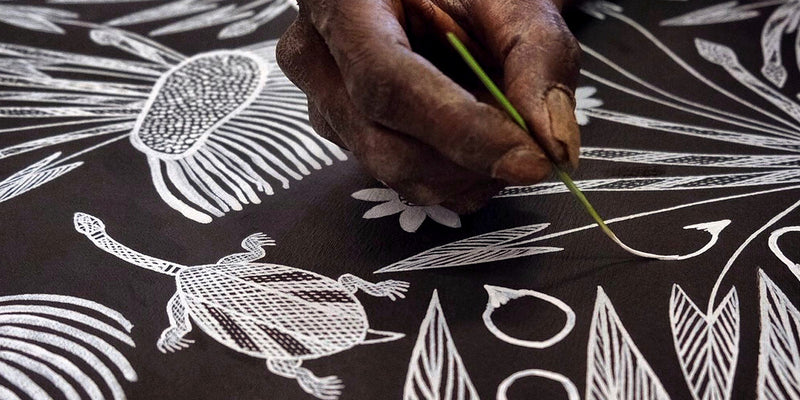
In zeitgenössischen Warlpiri-Gemälden wird traditionelle Ikonografie verwendet, um das Jukurrpa, bestimmte Stätten und andere Elemente darzustellen. In Gemälden des Mina Mina Jukurrpa werden oft geschwungene Linien verwendet, um die „ngalyipi“ (Schlangenranke) darzustellen. Kreise und runde Symbole können die „jintiparnta“ (Wüstentrüffel) darstellen, die die Frauen auf ihrer Reise sammelten, und gerade Linien werden verwendet, um die „karlangu“ (Grabstöcke) darzustellen. „Majardi“ (Haarschnur-Röcke) werden durch Wellenlinien dargestellt, die von einer einzelnen geschwungenen Linie herabhängen.